Section Politics
Thousands rally in Alabama for Black voting rights as redistricting fight reaches Montgomery and Selma
Organizers billed the May 2026 “All Roads Lead to the South” weekend as a mass response to a fresh Supreme Court order that reopened Alabama’s congressional map fight—linking Selma’s bridge to the Capitol steps where the Voting Rights Movement once converged.
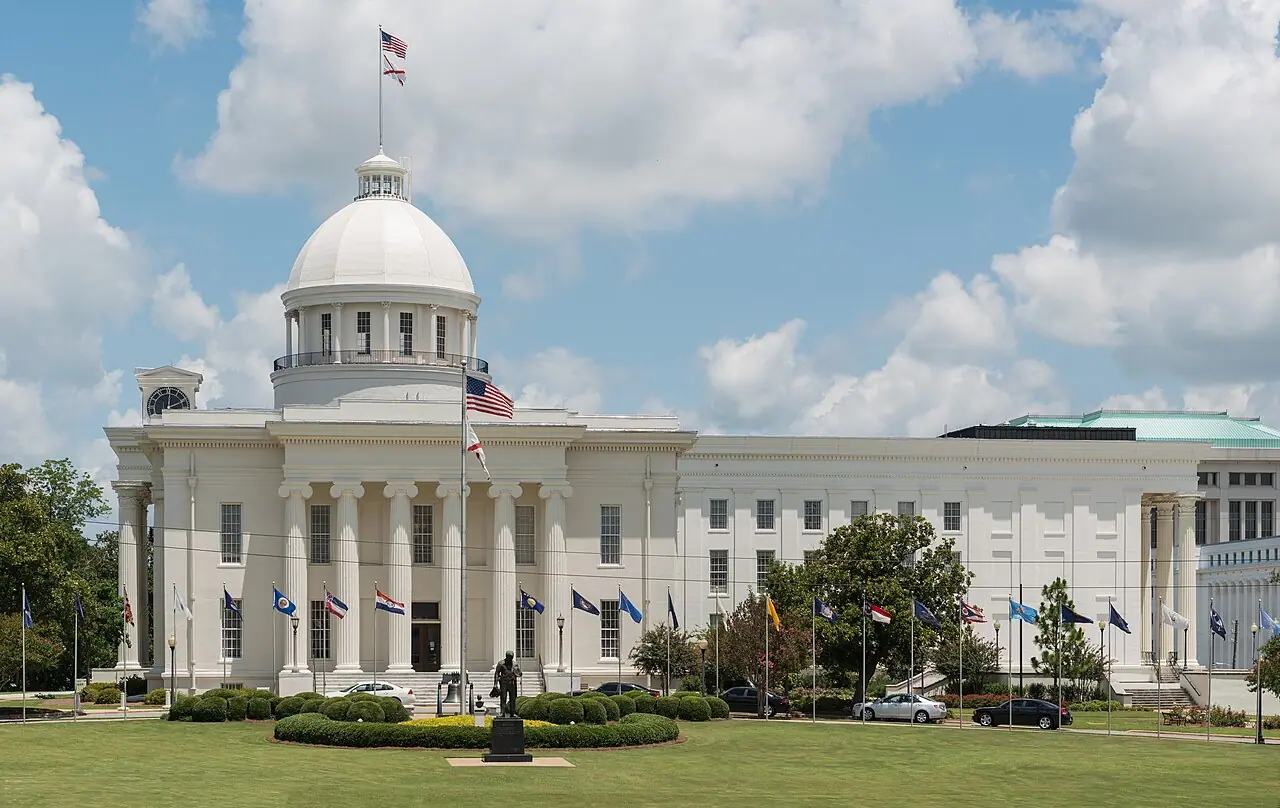
Thousands of demonstrators filled downtown Montgomery, Alabama, on Saturday, May 16, 2026, after a morning program in Selma, in a coordinated show of force for Black voting rights and congressional representation that organizers cast as the next chapter after a bruising Supreme Court week.
The route deliberately traced civil rights geography: prayer and assembly at the Edmund Pettus Bridge—where state troopers beat marchers on Bloody Sunday in 1965—then a motorcade and rally on the Capitol grounds where the Rev. Martin Luther King Jr. delivered his “How Long, Not Long” speech the same year. Speakers framed the weekend as both commemoration and emergency politics.
What protesters say they are demanding
Plaintiffs and lawyers who carried Alabama’s redistricting litigation for years told the crowd they want the state—and the federal courts—to preserve a second U.S. House district in which Black voters can realistically elect their preferred candidates. A lower court had ordered such a configuration after finding the state intentionally diluted Black voting strength; organizers said a sudden return to an earlier legislature-drawn plan would wipe out that gain.
Demonstrators also linked the Montgomery program to a broader Southern pattern: stricter voter identification rules, registration limits, and polling-place changes in states that once needed federal preclearance before altering election law. Rally rhetoric treated those moves as a package with the map fight, not as isolated administrative tweaks.
Chants carried across the plaza included “we won’t go back” and “we fight,” language participants said was aimed both at the 1960s baseline and at 2026 litigation.
What changed in law and politics the week before
Associated Press reporting summarized a chain of high-court actions: an April decision in a Louisiana case that struck a majority-Black House district there as an unconstitutional racial gerrymander and narrowed a key Voting Rights Act test; then, on Monday, May 12, 2026, a Supreme Court order that halted a lower court’s injunction and told judges to reconsider Alabama’s map in light of that Louisiana ruling.
The practical stakes described in court filings and state legislation: Alabama could revert toward a 2023 legislature-approved map with only one majority-Black district even though Black residents make up more than one quarter of the state’s population. Republican leaders argued the federal court had overreached and that the high court restored map-drawing power to elected lawmakers.
Alabama had already enacted a law allowing special primaries in several congressional districts if courts bless a boundary switch; reporting ahead of the rally mentioned an August special-primary window for some seats if the litigation breaks that way. Ordinary primaries remained scheduled for May 19, 2026, leaving county election offices with a compressed and potentially confusing set of instructions for voters.
Voices on the stage and from the opposing party line
U.S. Senator Cory Booker of New Jersey told the crowd Montgomery remained “sacred soil” and warned, “if we in our generation do not now do our duty, we will lose the gains and the rights and the liberties that our ancestors afforded us,” according to wire accounts from the scene.
U.S. Representative Shomari Figures—who won the court-drawn 2nd District in 2024—told reporters the dispute was less about one incumbent than about whether Black Alabamians would keep two seats in the delegation for the first time in the state’s history. Republican House Speaker Nathaniel Ledbetter, in comments carried by the same reporting chain, framed the litigation as an attempt to “overtake” a seat Republicans previously held and said the Louisiana ruling gave the state room to revisit a map he argued judges had forced on legislators.
Alabama Attorney General Steve Marshall praised the Supreme Court result in a recorded statement excerpted by news outlets; the clip included language about putting legislators in the strongest legal position to draw a congressional map that would favor Republicans “seven-to-zero”—a line rally speakers cited as proof of partisan intent.
What happens next in courts and on the calendar
Litigants said they would pursue remaining constitutional claims even where Voting Rights Act theories had narrowed. Civil rights groups pledged continued organizing alongside any new filings.
For voters, the hinge is procedural: which map controls which primary, whether special elections are called, and how secretaries of state communicate changes inside the three-week window before absentee deadlines stack up.
The Montgomery rally did not by itself change a court order—but it marked how quickly voting-rights coalitions are trying to translate Supreme Court paper into visible political pressure as the 2026 midterm cycle accelerates.
Geography and themes
Related places and recurring themes for this story.
- United States
- U.S. politics
- Voting rights
Suggested reading
Other stories that pair well with this one—often from the same section or on overlapping themes.
Trump withholds commitment on Taiwan arms after Xi warning as U.S.–China trade headlines land
President Donald Trump told reporters he would decide on a stalled roughly $14 billion arms package “over the next fairly short period,” after Xi Jinping warned mishandling Taiwan could bring the powers into conflict—while Washington and Taipei each insisted broader policy had not flipped overnight.
Trump approval sinks amid unpopular Iran conflict and darkening G.O.P. midterm signals
National surveys from late April 2026 put the president’s overall job rating in the mid-thirties, pair that rating with majority rejection of the Iran fight on forced-choice items, and—on one national survey—give Democrats a ten-point lead on the generic House ballot with higher reported enthusiasm.
Trump attacks Massie as Republican critic describes ‘desperate’ attempts to oust him from primary
With Kentucky’s 4th District Republican primary on Tuesday, President Donald Trump again blasted Representative Thomas Massie on social media while Massie—framing rival spending as an outside “buy” of the seat—said his opponents act “desperate” because he believes he leads in surveys.
FBI jet and luxury suite: Kash Patel under scrutiny over Philadelphia concert trip
Published accounts tie a May 2025 Gulfstream hop to a George Strait bill at the Linc with partner Alexis Wilkins and a reported five-figure suite band. House Judiciary Democrats are demanding travel logs; executive policy still requires FBI directors to fly government metal but reimburse personal legs at coach rates.
Justice Department weighs settlement of Donald Trump’s IRS lawsuit
Senior officials are debating whether to resolve a multibillion-dollar federal court fight the Trump family and business brought against the Internal Revenue Service—an unusual prospect when the executive branch both runs the agency and answers for it in litigation.
Deep South states redraw congressional maps ahead of 2026 midterms after Supreme Court ruling weakens Voting Rights Act protections
Louisiana, Alabama, Georgia, and Mississippi are each navigating court orders, legislative sessions, and delayed primaries as a mid-decade redistricting wave — unprecedented since the 1800s — reshapes the electoral map.
Barney Frank Dies at 86, LGBTQ Trailblazer
He came out in Congress in 1987, chaired Financial Services through the 2008 crash, and helped steer Dodd-Frank before retiring in 2013; his sister confirmed his death to NBC Boston.
Trump-Backed Gallrein Ousts Massie in Kentucky
Ed Gallrein, backed by Donald Trump, ousted libertarian-leaning Rep. Thomas Massie in Kentucky's May 19 GOP primary for the 4th District—the costliest House primary on record.
Wyden: DOJ May Halt Trump IRS Audits
Senate Finance Chair Ron Wyden warns reported Justice Department settlement language could halt IRS audits of older Trump-family returns; CNN, ABC, the Post, and CNBC describe overlapping terms tied to the tax-leak lawsuit.
Brookings-linked modelling puts U.S.-citizen kids touched by parental ICE detention near 145,000 since the surge
ProPublica’s unpacking of a May 2026 Brookings exercise walks through Census-informed imputation against ICE arrest streams—far above what federal forms capture when parents fear disclosing citizen children—while parallel academic trackers still document the detention-and-removal machinery in administrative data alone.
Keep exploring
Browse the full archive or return to the front page.
Sources and external links
Sources and filings our editors consulted to verify this story. External links open in a new tab.