Section Technology
Calif’s Mythos-on-M5 kernel exploit story gains an official Apple footnote in macOS Tahoe 26.5 security credits
Calif still narrates seven-day lab work with Memory Integrity Enforcement on macOS 26; Apple’s catalogue page for Tahoe 26.5 now lists CVE-2026-28952 as reported by Calif.io in collaboration with Claude and Anthropic Research—a narrower confirmation than Calif’s full chain narrative but stronger than silence.
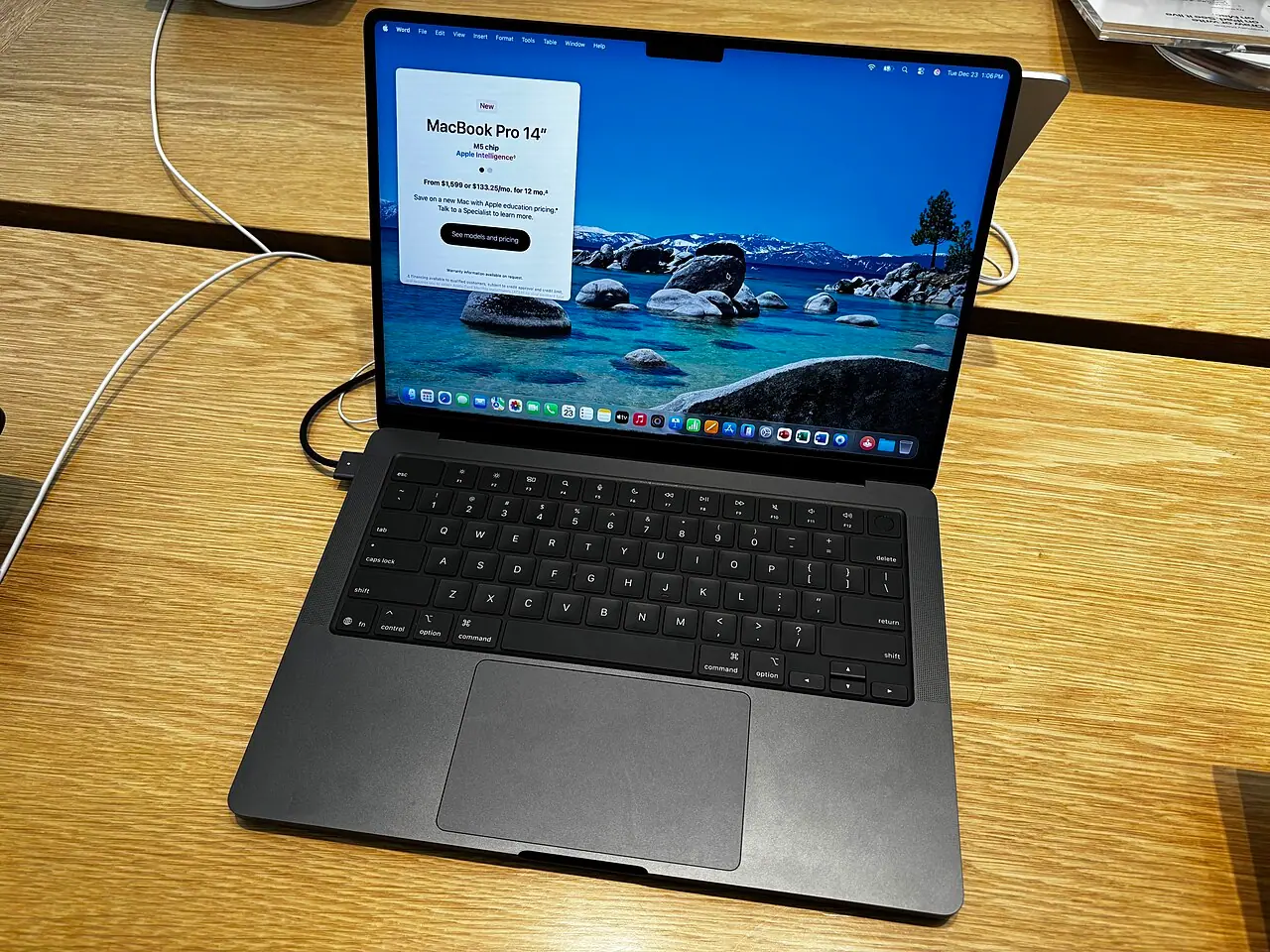
A Vietnam-based security company, Calif, says it paired Anthropic’s Claude Mythos Preview with senior human exploit developers to build what it calls the first public macOS kernel memory-corruption chain that survives Memory Integrity Enforcement (MIE) on bare-metal Apple M5 hardware under macOS 26.
In a detailed Substack note published the same week trade and consumer outlets amplified the story, Calif dates an initial bug find to 25 April 2026 and a working chain to 1 May 2026—about seven days wall-clock. The firm says it delivered findings in person in California and argues Mythos sped triage on familiar bug classes without replacing hands-on kernel work to defeat MIE.
What Calif asserts technically
The public write-up frames a chained attack from an unprivileged local account, combining two vulnerabilities plus memory-shaping techniques so code still runs with MIE’s tagging defences on. Calif stresses local access as the starting assumption: the headline risk is less “drive-by internet takeover” than proof that a marketed hardening layer can be pressured when elite teams also hold frontier models.
Anthropic positions Mythos as a tightly gated preview—routed through vetted channels such as Project Glasswing—rather than a consumer web chatbot. Calif’s write-up therefore feeds two audiences at once: CISOs pricing boutique chains, and policymakers tracking who gets autonomous vulnerability tooling in practice.
Apple’s public record versus Calif’s drama
Apple’s own macOS Tahoe 26.5 security-content documentation lists CVE-2026-28952 with credit wording naming Calif.io in collaboration with Claude and Anthropic Research. That line confirms Apple accepted at least one coordinated disclosure tied to the Calif–Anthropic pairing; it does not, by itself, validate every speed claim, video demo, or marketing comparison in Calif’s blog.
Readers should still treat execution artefacts and independent replication as the bar before upgrading “researchers claim” to settled engineering consensus. Apple’s standard channel for technical detail remains per-CVE text and subsequent XNU / security-update releases—not a press release that retells a vendor’s timeline.
Policy and consumer takeaways stay narrow
Even if every Calif paragraph survives outside audit, the lesson is not “Mythos autonomously pwnd Apple in a browser tab.” It is narrower: well-resourced teams with contractual model access and deep kernel craft can shorten windows on complex bug classes—exactly the dual-use debate Anthropic already invites with Glasswing-style gating.
For everyday Mac users the action list is boring but durable: apply macOS Tahoe 26.5 (or whatever security branch your fleet tracks), treat local-user compromise as high severity on any OS, and read Apple’s CVE notes when they land rather than inferring patch coverage from headlines alone.
Why Anthropic’s access policy remains contested
Mythos Preview intersects export-control arguments, cyber-insurance stress tests, and national-security procurement stories that move on different calendars from consumer Mac news. Calif’s anecdote adds a concrete Apple CVE string regulators can cite; it does not resolve how many simultaneous “defensive” red teams a vendor can onboard before preview access behaves like general distribution in practice.
Geography and themes
Related places and recurring themes for this story.
- United States
- Technology
- Cybersecurity
Suggested reading
Other stories that pair well with this one—often from the same section or on overlapping themes.
Google CLI Links OpenClaw to Gmail Unsupported
Google's open-source Workspace CLI on GitHub links AI agents including OpenClaw to Gmail and Drive, but the company labels the project unsupported and warns workflows may break as APIs evolve.
Google I/O 2026 Pushes Always-On Gemini Agent
Google I/O 2026 in Mountain View spotlighted Gemini Spark, described as an always-on personal agent across Workspace and other apps—with user approval before sensitive actions—plus faster Gemini models, agentic Search, and Android XR hardware.
Claude Code Auto Mode routes risky tool calls through a Sonnet 4.6 classifier instead of endless taps
Anthropic’s March 2026 engineering deep dive frames Auto Mode as permission automation: a two-stage transcript filter plus a prompt-injection probe, built after internal telemetry showed users accepting 93% of manual prompts anyway.
Anthropic’s Q1 2026 growth reads near 80× in markets coverage; Semi Analysis tallies put ARR above $44 billion
Benzinga and syndicated Fortune copy captured chief executive Dario Amodei calling the pace “too hard to handle” around an 80-fold quarterly surge narrative, while a Semi Analysis digest summarized by trade press puts annualized run-rate revenue above $44 billion after a climb from about $9 billion at year-end 2025.
Anthropic buys Stainless, the API-to-SDK toolchain rivals including OpenAI and Google relied on
The 2022 New York startup led by former Stripe engineer Alex Rattray automated libraries across Python, TypeScript, Kotlin, Go, and Java; Anthropic confirms it will wind down hosted products for other vendors while letting past customers keep generated code.
Walmart’s six new Onn Android 16 tablets from $97: spec sheet, who they beat, and who should skip them
Launch-day listings describe Android 16 across the stack—from a 7-inch Helio G80 starter through a 13-inch Pro bundle with stylus—but paper wins still need reality checks against Amazon’s Fire line, Lenovo’s budget slabs, and discounted Samsung Tab hardware.
UK AI Security Institute publishes Mythos Preview cyber scores: 73% on expert CTFs, first model to finish a 32-step range in three of ten runs
AISI’s 13 April 2026 write-up summarises controlled evaluations of Anthropic’s Claude Mythos Preview on capture-the-flag tasks and on “The Last Ones,” a 32-step simulated corporate intrusion; Opus 4.6 remains the nearest comparator on the multi-step range but trails on step count.
Eric Schmidt booed at University of Arizona commencement when his speech turns to artificial intelligence
Former Google chief executive Eric Schmidt delivered the University of Arizona’s 15 May 2026 commencement address in Tucson, but Business Insider and other outlets reported that parts of the stadium crowd booed whenever he pivoted to AI and automation; he paused to acknowledge the noise, called graduates’ anxieties rational, and argued they should help steer the technology rather than only fear it.
Mayo Clinic validation work shows REDMOD AI spotting pancreatic cancer on CTs far ahead of usual reads
Decrypt’s April recap of the landmark study highlights up to a three-year lead in select cases; oncology trade write-ups of the same paper pin median detection near 475 days with 73% sensitivity versus roughly 39% for pooled radiologists on identical prediagnostic scans.
Sony signals first-party tentpole single-player games will stay off PC after years of delayed ports
Studio Business Group chief Hermen Hulst reportedly told staff in a May 2026 town hall—surfaced through Bloomberg’s Jason Schreier—that Sony Interactive Entertainment is done shipping its big narrative exclusives to Windows, while live-service titles such as Marathon and Marvel Tokon remain cross-platform.
Keep exploring
Browse the full archive or return to the front page.
Sources and external links
Sources and filings our editors consulted to verify this story. External links open in a new tab.