Section World
Israel says it killed Hamas Gaza military chief Izz al-Din al-Haddad; Hamas official confirms death to Reuters
Prime Minister Benjamin Netanyahu and Defence Minister Israel Katz said Israeli forces targeted Izz al-Din al-Haddad in Gaza City on 15 May 2026, describing him as a surviving architect of the 7 October 2023 attacks; international wires then reported a senior Hamas official confirming his death while medics counted at least seven fatalities in related strikes and families prepared a Saturday funeral.
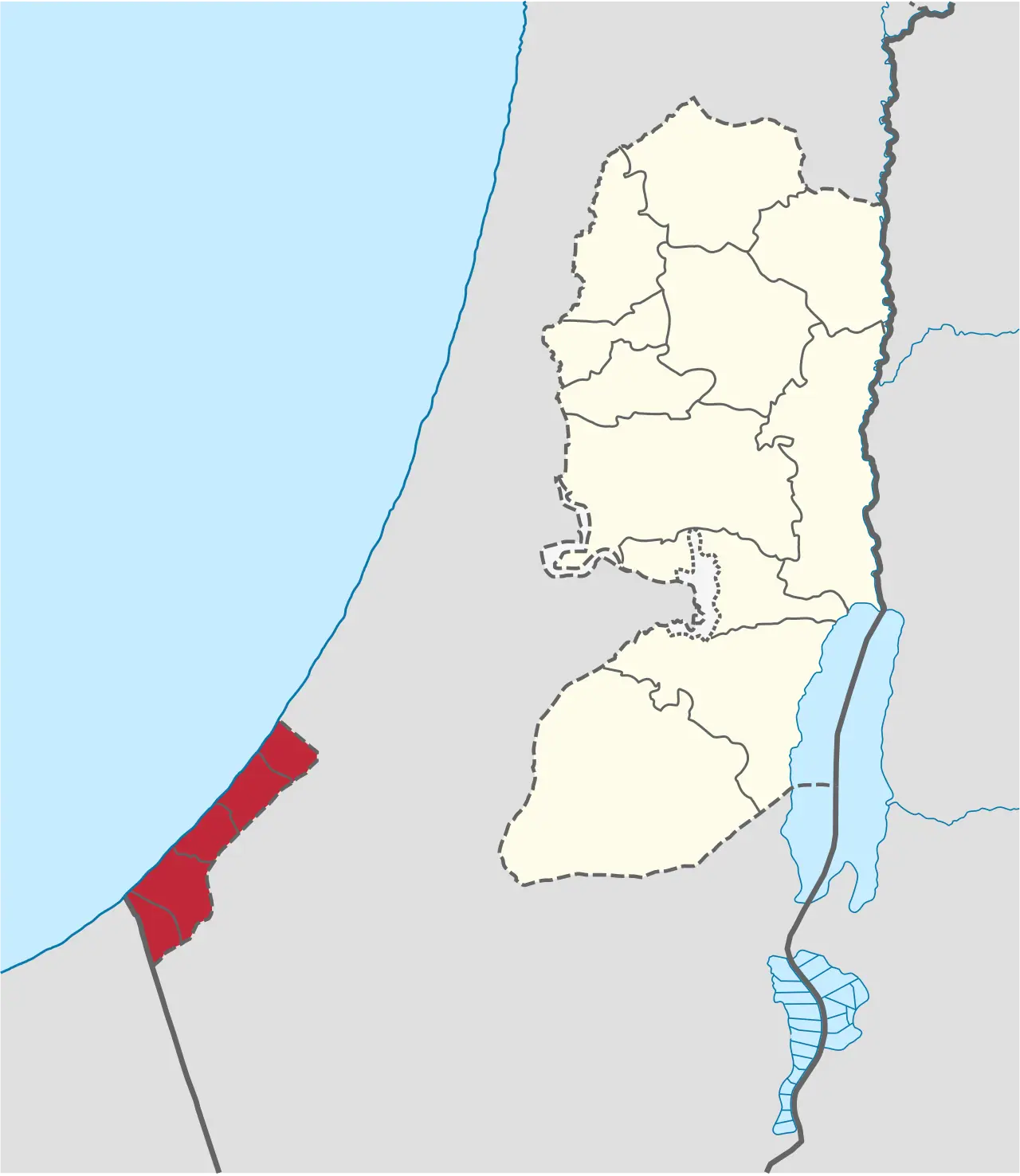
Israel’s political leadership and military said they carried out a precision strike in Gaza City on Friday, 15 May 2026 (local), aimed at Izz al-Din al-Haddad, whom they identified as head of Hamas’s military wing in the Strip and a surviving planner of the 7 October 2023 mass-casualty attack inside Israel. Prime Minister Benjamin Netanyahu and Defence Minister Israel Katz jointly accused al-Haddad of responsibility for “murder, abduction, and harm” to Israeli civilians and troops, language that matches the government’s long-standing legal framing of Hamas as a terrorist organisation.
The Times of Israel relayed an IDF statement alleging al-Haddad helped manage hostage captivity logistics and positioned captives near himself to deter targeting—claims Reuters-based summaries said could not be independently adjudicated from open sources alone.
What international wires reported about confirmation and casualties
The Indian Express, citing Reuters and Associated Press threads, said a senior Hamas official confirmed al-Haddad’s death privately to Reuters while the movement had yet to issue a formal communique, and that mosque loudspeakers in Gaza City later carried martyrdom notices. The same cluster of reports described family confirmation to AP that al-Haddad died alongside six other people—including his wife and daughter—and noted a Saturday street funeral with Palestinian and Hamas flags, situating the event inside dense urban terrain where blast signatures on apartment blocks draw immediate humanitarian scrutiny.
Free Malaysia Today’s Reuters digest added that Palestinian medics attributed at least seven deaths—including three women and a child—and dozens of wounded across Friday strikes that hit both a flat and a vehicle, while explicitly cautioning readers that casualty overlap with al-Haddad’s fate was not yet locked in every wire paragraph.
Biographical lines wires attached to battlefield significance
Summaries of Reuters backgrounders reproduced in Indian Express describe al-Haddad, born 1970, as a 1980s recruit who rose through Qassam’s internal-security Majd cadre and Hamas’s Military Council, then inherited the Gaza military leadership after Israel killed Mohammad Sinwar in May 2025—a succession detail that matters because Israel has serially targeted Hamas’s wartime command array yet still faces rocket and small-cell violence from Gaza.
Al Jazeera’s follow-on analysis—editorial in tone but useful on structure—argued Qassam’s decentralised cells could absorb the loss faster than political optics might suggest; readers should treat any single-commander decapitation narrative as contested until order-of-battle evidence surfaces in open court or confirmed defections.
Ceasefire context and diplomatic freeze
Wire-led pieces noted a U.S.-backed ceasefire architecture dating to October 2025 yet under strain from near-daily Israeli fire reported by AP and Gaza health spokespeople—statistics that carry known methodological disputes yet still signal sustained kinetic tempo. Indian Express also tied the strike week to a wider White House “post-war” Gaza blueprint President Donald Trump has promoted while Israel–Hamas indirect channels remain deadlocked.
That diplomatic stasis means al-Haddad’s killing is not only a tactical file but a messaging signal across Arab capitals, European foreign ministries, and U.N. ceasefire monitors about whether talks can restart before another high-casualty urban cycle.
Editorial caution on names and sourcing
Readers searching social spellings such as “Ezzein al-haddod” are encountering transliteration noise; the dominant English wire form is Izz al-Din al-Haddad. Until Hamas publishes an Arabic martyrology with serial numbers and Israel declassifies strike BDA imagery, the epistemic status of some biographic minutiae remains “wire-sourced biography,” not biographical certainty.
What is already firm enough for a news peg: Israel says it targeted and killed him; Reuters heard a Hamas official confirm death; medics counted Friday dead in parallel strikes; funerals proceeded amid continued Gaza combat—four facts that can be updated independently if any limb of that chain later retracts.
Geography and themes
Related places and recurring themes for this story.
- Israel
- Middle East security
- War
Suggested reading
Other stories that pair well with this one—often from the same section or on overlapping themes.
US–Iran war in the Middle East: who is involved, what each country is doing, and how they are affected
A widening U.S.–Iran war is fought with missiles and sanctions but lived through shipping insurance, food prices, refugee routes, and alliance politics from Manama to Mumbai—this is a full tour of the chessboard, not a scorecard of two capitals alone.
Belarus and Russia rehearse tactical nuclear delivery as Minsk dismisses alarm and Kyiv cries escalation
Missile troops and combat aircraft still drill covert moves and nuclear-use prep, but the same news cycle also airs Minsk’s insistence the exercise threatens no third country—set against Ukrainian Foreign Ministry warnings and Kremlin spokesman Dmitry Peskov’s pushback on Zelenskyy’s talk of a renewed Belarus-axis offensive.
Hargeisa fills its 18 May squares with a post-recognition parade as Herzog seals the envoy link
Nairobi- and Tel Aviv–linked reporting described thousands in Hargeisa for the usual independence anniversary—this time under the glare of December 2025’s Israeli recognition—while President Isaac Herzog formally received Somaliland’s first ambassador in Jerusalem the same diplomatic window.
Israel boards Global Sumud flotilla off Crete; President Connolly’s sister sails on hull that slipped the net
Night-time interceptions in late April 2026 emptied more than twenty small craft of roughly 175–200 activists hundreds of nautical miles from Gaza, including seven Irish passport holders—while Dr Margaret Connolly, sister of President Catherine Connolly, remained with a companion vessel that organisers and reporters said had not been taken.
Ukraine’s overnight drone wave: what Russia reported near Moscow after Kyiv’s deadliest week
Russian authorities described one of the largest nationwide Ukrainian drone barrages of the war—almost 600 airframes in a single night, they said—while Moscow’s mayor and regional governors listed civilian deaths and injuries around the capital region; President Volodymyr Zelenskyy publicly cast the campaign as justified retaliation after Russian strikes on Kyiv that officials had tied to dozens of civilian deaths days earlier.
Trump on Truth Social: Iran’s “clock is ticking,” move “FAST,” or “there won’t be anything left of them”
Agency-backed outlets reported on 17 May 2026 that U.S. President Donald Trump posted a capitalised ultimatum to Tehran on Truth Social amid fragile Gulf ceasefire diplomacy, quoting him verbatim as tying speed on a deal to survival while pairing the message with a reported call to Israeli Prime Minister Benjamin Netanyahu.
Russia launches 1,500 drones in massive aerial offensive against Ukraine; at least 21 reported dead
A devastating 48-hour aerial campaign has targeted Kyiv and multiple regional hubs, marking a significant escalation in the use of automated swarm tactics to overwhelm Ukrainian air defenses.
Revised Iranian proposal to end war shared with U.S., Pakistani source says
Prime Minister Shehbaz Sharif told a public event in Islamabad that Pakistan had received Iran’s written answer to Washington’s latest peace text, while Iranian state outlets framed the document around stopping the war and reopening shipping. Wire dispatches citing a Pakistani government official involved in mediation said the material was passed onward to the United States the same day.
Post analysis of satellite imagery ties Iranian strikes to damage or loss of at least 228 U.S. structures or pieces of equipment
A Washington Post investigation published in early May 2026 says it catalogued hangars, barracks, fuel sites, aircraft, and radar, communications, and air-defense assets hit across fifteen U.S. military locations in six Gulf and Levant partner states—arguing the tally dwarfs prior public U.S. disclosures while documenting how commercial imagery gaps and Iranian-published photos shaped what could be verified.
War has made the United States and Iran weaker—in different ways and on different clocks
Open conflict shrinks margin for both Washington and Tehran: budgets, energy markets, and domestic legitimacy absorb shocks that do not land symmetrically, even when each side still has lethal tools left.
Keep exploring
Browse the full archive or return to the front page.
Sources and external links
Sources and filings our editors consulted to verify this story. External links open in a new tab.