Section World
Hargeisa fills its 18 May squares with a post-recognition parade as Herzog seals the envoy link
Nairobi- and Tel Aviv–linked reporting described thousands in Hargeisa for the usual independence anniversary—this time under the glare of December 2025’s Israeli recognition—while President Isaac Herzog formally received Somaliland’s first ambassador in Jerusalem the same diplomatic window.
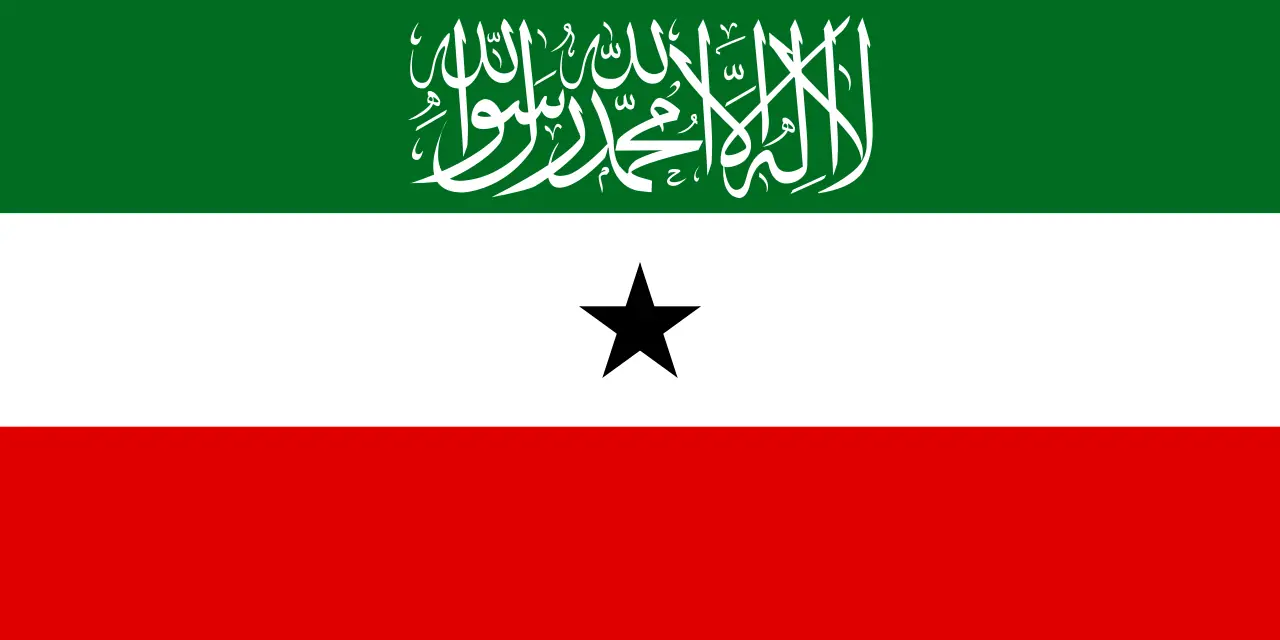
Every 18 May, Somaliland’s government asks the world to remember its 1991 breakaway declaration from Somalia and the costly stability it claims to have built since without a United Nations seat. The 2026 iteration arrived with an extra ribbon of statecraft: Israeli recognition from 26 December 2025—the first sovereign government to take that step—meaning Hargeisa’s military bands and street dances doubled as a victory lap for foreign-policy gamblers as much as a nationalist holiday.
Kenya’s Standard Digital reported thousands packing the capital for parades and speeches “with added excitement this year following Israel’s recognition,” while Ynetnews filed from the parallel Israeli storyline: President Isaac Herzog receiving the credentials of Somaliland’s first ambassador to Israel, Dr Mohammed Hagi, and praising what he called a historic diplomatic opening. The two datelines do not replace each other—they show how a contested polity tries to manufacture normalcy on the same calendar a sceptical African Union and a furious Mogadishu still treat as secession.
Abdirahman Mohamed Abdullahi’s administration—often shortened in English copy to President “Cirro”—has framed Israel not as a theological alliance but as a beachhead for investment, technology, and eventual port access along the Gulf of Aden. Ynet’s reporting also flagged an expected reciprocal presidential visit to Israel, a move that would further cement person-to-person ties even if trade volumes remain modest in year one.
RTE’s January 2026 analysis piece summarised why Western capitals care: Somaliland offers a democratic-ish partner astride shipping lanes where piracy, Yemeni spillover, and Ethiopian–Eritrean rivalries intersect. The same geography is why Somalia’s federal government calls recognition a red line that could unravel fragile federal bargains in Garowe and Mogadishu.
Why one embassy ceremony still leaves UN maps grey
Al Jazeera’s Horn coverage after the Israeli foreign minister’s January visit sketched the diplomatic arithmetic: Israel gains a potential logistics node and intelligence vantage; Somaliland gains a veto-player ally inside Washington’s Middle East coalition. None of that automatically drags the United States, UAE, or Ethiopia into extending full recognition, and Standard’s Africa writers explicitly noted hopes for a “domino” had not materialised by the May holiday.
Until more states move, Somaliland’s passports, air-code sovereignty, and mobile-money innovation will keep outpacing its formal membership in anything beyond football friendlies. That mismatch is the story under the fireworks: recognition as a ladder with uneven rungs, not a trapdoor into instant UN membership.
Honest limits on what parade footage proves
Television montages of dancing crowds do not measure cabinet support in Borama or Las Anod, nor do they settle clan power-sharing disputes that periodically flare along Somaliland’s eastern edge. Editors should pair celebratory B-roll with named human-rights reporting wherever local journalists flag arrests linked to politics or religion.
The defensible publish line stays with verifiable diplomatic acts—Herzog’s credentials ceremony, Israeli recognition’s date, the ambassador’s name—and with clearly attributed predictions about follow-on visits or trade corridors. Everything else is forecasting dressed in flags.
Geography and themes
Related places and recurring themes for this story.
Suggested reading
Other stories that pair well with this one—often from the same section or on overlapping themes.
Aftenposten Modi Cartoon Stirs Racism Row
Aftenposten ran Halleraker’s cartoon the same day as Rossavik’s Meninger column; Red MP Rana called it racist; political editor Alstadheim told Dagbladet the symbols backed Rossavik’s point and were not meant to demean.
Trump on Truth Social: Iran’s “clock is ticking,” move “FAST,” or “there won’t be anything left of them”
Agency-backed outlets reported on 17 May 2026 that U.S. President Donald Trump posted a capitalised ultimatum to Tehran on Truth Social amid fragile Gulf ceasefire diplomacy, quoting him verbatim as tying speed on a deal to survival while pairing the message with a reported call to Israeli Prime Minister Benjamin Netanyahu.
Cooper presses Gulf partners to reopen Hormuz routes farmers need for fertiliser
Britain’s foreign secretary has tied Iran’s disruption of the strait to fertiliser reaching African fields and wider prosperity, while parallel reporting documents urea spikes, stuck cargoes, and UN hunger modelling that treat the next planting cycles as the clock that matters.
Tehran floats Hormuz tolls on subsea internet cables as IRGC-tied media talk billions
Euronews and RFE/RL trace how Tasnim- and Fars-style outlets are packaging seabed leverage—transit fees, forced maintenance clauses, even cloud-giant localisation demands—while Mostafa Taheri, an Iranian parliamentary industries voice, throws around a headline revenue ceiling on the order of fifteen billion dollars annually that markets treated as rhetoric, not an invoice.
Tehran markets a ‘Hormuz Safe’ lane that settles marine cover in Bitcoin as war-risk premiums bite
Indian and trade-press explainers describe a new Iranian digital platform pitching blockchain-settled policies for commercial hulls threading the strait—complete with ministry talk of a ten-billion-dollar revenue ceiling—while compliance lawyers warn U.S. and EU persons that paying premiums into Iranian rails can still collide with sanctions law regardless of coin type.
Havana leans on self-defense law while rejecting US drone-strike talk as intervention pretext
President Miguel Díaz-Canel framed military deterrence as a lawful shield, not a war wish, after US-facing outlets amplified an Axios-style tally of imported drones; Washington’s January national-emergency declaration on Cuba still frames the island as an extraordinary threat.
Brazil’s TRF-1 faces a reckoning on whether Belo Sun’s Volta Grande gold license snaps back to freeze
After a single federal appellate judge revived the Canadian miner’s installation permit in February 2026, prosecutors appealed to the same court’s Sixth Panel—where the next collegiate ruling decides if the decade-old suspension logic from 2017 returns or the Pará project keeps rolling.
Kenya’s matatu shutdown over pump prices turns lethal as ministers report four dead
Interior Cabinet Secretary Kipchumba Murkomen’s tally—four killed, dozens hurt, and hundreds detained—lands atop a nationwide minibus strike that BBC reporting ties to another double-digit jump in regulated diesel and petrol caps.
Tarsus rampage leaves six dead and eight wounded as police scour Mersin for gunman
International outlets describe multiple shooting sites in southern Türkiye’s Tarsus district, a helicopter-backed manhunt, and a Cabinet-room toll readout from President Erdoğan while wire-sourced reporting sketches an alleged domestic-violence start and street-to-car attacks.
Greenlandic PM says US ambitions on controlling the territory still show no sign of changing
Jens-Frederik Nielsen is pairing warmer language about closed-door trilateral talks with the same red lines Nuuk has held since winter: no sale, no transfer of sovereignty, and deep scepticism that Washington has abandoned designs on ownership even as negotiators discuss southern bases.
Keep exploring
Browse the full archive or return to the front page.
Sources and external links
Sources and filings our editors consulted to verify this story. External links open in a new tab.