Section World
Greenlandic PM says US ambitions on controlling the territory still show no sign of changing
Jens-Frederik Nielsen is pairing warmer language about closed-door trilateral talks with the same red lines Nuuk has held since winter: no sale, no transfer of sovereignty, and deep scepticism that Washington has abandoned designs on ownership even as negotiators discuss southern bases.
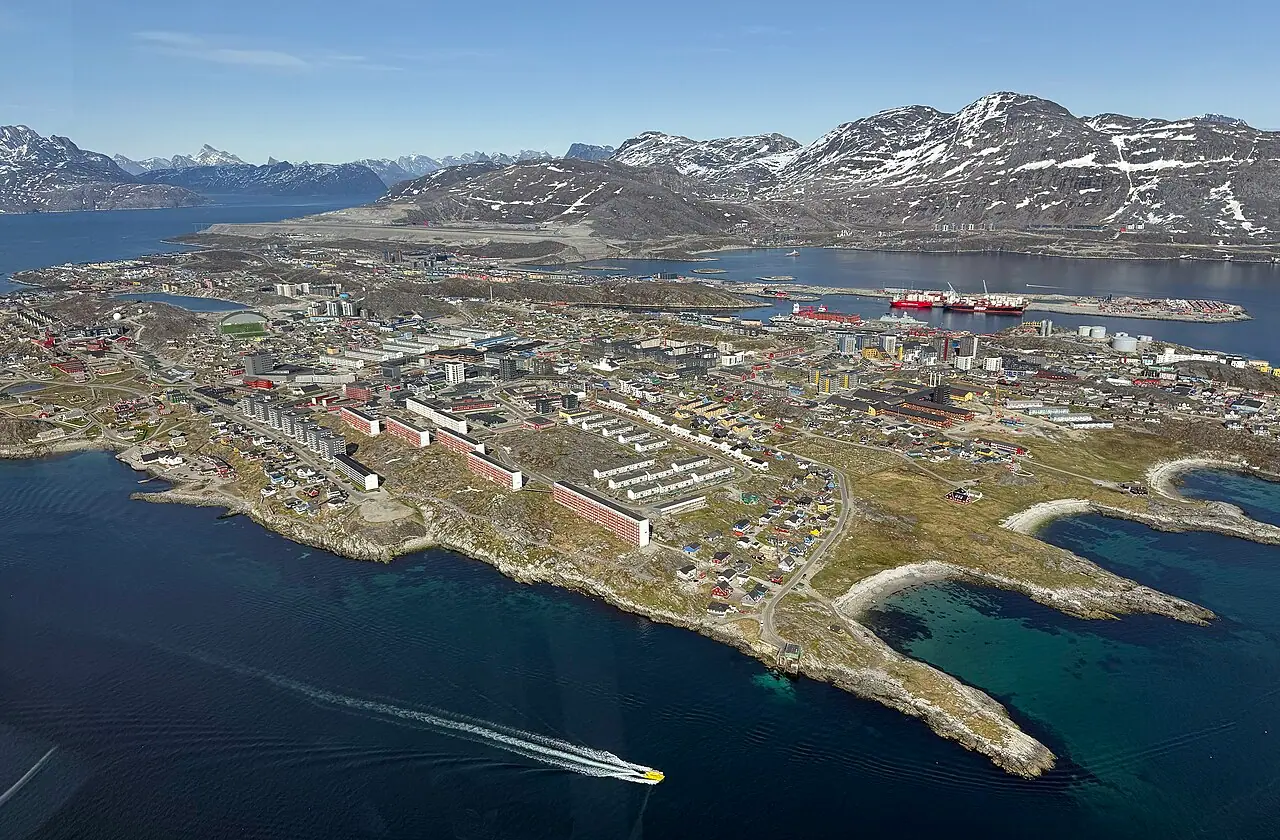
Greenland’s premier, Jens-Frederik Nielsen, is telling international audiences that he still reads US policy as aimed at control of the Danish autonomous territory—not merely extra radar sites—even as the Trump administration trades public seizure talk for working-group sessions with Copenhagen and Nuuk.
The through-line is easiest to date to 2 February 2026, when Nielsen warned Greenland’s parliament, via a translator in wire copy, that “the view upon Greenland and the population has not changed: Greenland is to be tied to the U.S. and governed from there,” and that Washington continues seeking “paths to ownership and control over Greenland,” even after President Donald Trump had publicly ruled out military force. The same address described acute stress across society—“some of our compatriots have severe sleep problems, children feel the worry and anxiety of adults”—and called the pressure “completely unacceptable.”
What changed in May: tone, not the ownership argument
At the Copenhagen Democracy Summit on 12 May 2026, Nielsen acknowledged that negotiations with the United States had “taken some steps in the right direction” and that conversations were “in a better place than when we had our conversations through the media,” according to BBC reporting from the Danish capital. The same day, in remarks carried by Irish and Singaporean wires, he still insisted: “We are negotiating but we don’t have an agreement,” while repeating Greenland’s willingness to shoulder more security work under existing law provided it comes with respect.
Those wires recap a 1951 defence pact, updated in 2004, that already lets Washington expand troops and installations if Denmark and Greenland are informed in advance—legal scaffolding that makes “more bases” a negotiable technical matter while leaving Greenland’s self-rule government to argue that sovereignty itself is off the table. Nielsen’s public mantra through the spring has stayed blunt on the latter point: “We are not to be taken. We are not for sale,” he told reporters in Copenhagen, in the same BBC dispatch.
What Washington is asking for behind closed doors
BBC sourcing in the same news cycle describes US officials pursuing three new military facilities in southern Greenland to widen surveillance toward the GIUK gap, supplementing the long-standing Pituffik installation in the north-west. One source briefed on the talks said negotiators had floated treating some facilities as US sovereign territory—a detail the White House would not confirm on the record and that Greenlandic representatives in Washington declined to discuss when approached by the BBC.
The article also sketches a Washington-based working group that had met at least five times since mid-January, pairing senior US State Department staff with Danish permanent-secretary and ambassador-level figures and Greenland’s lead diplomat in the US capital. Trump’s named envoy to Greenland, Louisiana governor Jeff Landry, was portrayed by several sources as largely absent from those technical sessions, raising questions in allied capitals about which channel actually sets US bargaining positions.
Denmark’s hung parliament and the next moves
Parallel reporting notes Denmark has lacked a fully formed cabinet since a 24 March 2026 election produced no majority bloc, complicating how quickly Copenhagen can bless any complex basing or status-of-forces package even when Nuuk and Washington find provisional language. Nielsen has flagged a possible visit by Landry to Greenland the following week while stressing any meeting must stay “with respect.”
For readers sorting signal from noise: Nielsen’s office is not denying that talks exist or that Arctic security is a shared NATO worry; it is insisting that ownership language and coercive framing have not been retired in substance just because January’s loudest threats quieted. The diplomatic months ahead will test whether new installations can be written as voluntary, treaty-grounded cooperation—or read in Nuuk as another route toward the control Nielsen says he still sees on the horizon.
Geography and themes
Related places and recurring themes for this story.
- Greenland
- Denmark
- United States
- Diplomacy
Suggested reading
Other stories that pair well with this one—often from the same section or on overlapping themes.
Canada tightens Arctic and Nordic defense links as Greenland studies a Ranger-style patrol force
After months of U.S. rhetoric over Greenland and strained North American politics, Ottawa is deepening military procurement talks with Denmark, Finland, Iceland, Norway, and Sweden while Nuuk and Copenhagen consult Canada on adapting the Canadian Rangers model for local surveillance.
Trump on Truth Social: Iran’s “clock is ticking,” move “FAST,” or “there won’t be anything left of them”
Agency-backed outlets reported on 17 May 2026 that U.S. President Donald Trump posted a capitalised ultimatum to Tehran on Truth Social amid fragile Gulf ceasefire diplomacy, quoting him verbatim as tying speed on a deal to survival while pairing the message with a reported call to Israeli Prime Minister Benjamin Netanyahu.
Trump withholds commitment on Taiwan arms after Xi warning as U.S.–China trade headlines land
President Donald Trump told reporters he would decide on a stalled roughly $14 billion arms package “over the next fairly short period,” after Xi Jinping warned mishandling Taiwan could bring the powers into conflict—while Washington and Taipei each insisted broader policy had not flipped overnight.
U.S. indicts Raúl Castro over 1996 plane shootdown
Federal prosecutors in Miami unsealed murder and conspiracy charges against the 94-year-old former Cuban leader for his alleged role in downing two civilian aircraft.
Aftenposten Modi Cartoon Stirs Racism Row
Aftenposten ran Halleraker’s cartoon the same day as Rossavik’s Meninger column; Red MP Rana called it racist; political editor Alstadheim told Dagbladet the symbols backed Rossavik’s point and were not meant to demean.
Trump delays Iran strike after Gulf appeal
President Donald Trump said late on 18 May 2026 in Washington that he was postponing a U.S. military strike on Iran that had been scheduled for the following day after Qatar, Saudi Arabia, and the United Arab Emirates asked for time while diplomacy continued; he also told the armed forces to stay ready for a large-scale assault if talks fail.
Havana leans on self-defense law while rejecting US drone-strike talk as intervention pretext
President Miguel Díaz-Canel framed military deterrence as a lawful shield, not a war wish, after US-facing outlets amplified an Axios-style tally of imported drones; Washington’s January national-emergency declaration on Cuba still frames the island as an extraordinary threat.
Hargeisa fills its 18 May squares with a post-recognition parade as Herzog seals the envoy link
Nairobi- and Tel Aviv–linked reporting described thousands in Hargeisa for the usual independence anniversary—this time under the glare of December 2025’s Israeli recognition—while President Isaac Herzog formally received Somaliland’s first ambassador in Jerusalem the same diplomatic window.
India says Russian crude buys track commercial logic—not Washington’s waiver calendar
Petroleum ministry joint secretary Sujata Sharma told reporters on 18 May 2026 that imports ran before, during, and after the latest U.S. Treasury carve-out, while state fuel retailers still bleed roughly ₹750 crore a day even after a ₹3-per-litre pump increase.
NATO’s largest European special-forces rehearsal opens as Trojan Footprint 2026
Roughly three thousand American and allied commandos from twenty-three countries are training from the Baltic rim down through the Balkans and into the Mediterranean and Black Sea basins—led out of Stuttgart by U.S. Special Operations Command Europe with NATO’s special-operations headquarters in the same chain of command.
Keep exploring
Browse the full archive or return to the front page.
Sources and external links
Sources and filings our editors consulted to verify this story. External links open in a new tab.