Section World
NATO’s largest European special-forces rehearsal opens as Trojan Footprint 2026
Roughly three thousand American and allied commandos from twenty-three countries are training from the Baltic rim down through the Balkans and into the Mediterranean and Black Sea basins—led out of Stuttgart by U.S. Special Operations Command Europe with NATO’s special-operations headquarters in the same chain of command.
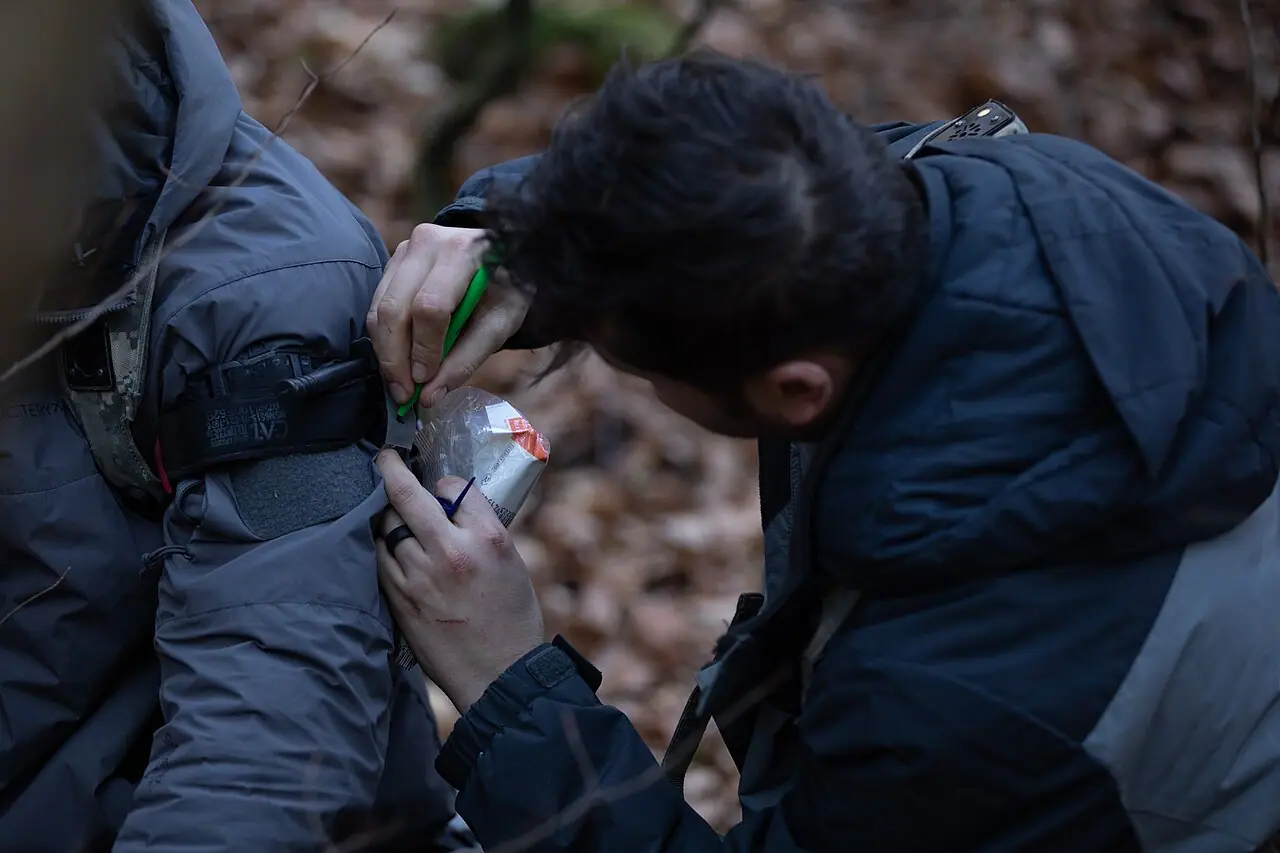
The spring 2026 iteration of Trojan Footprint is the kind of exercise that rarely breaks into civilian headlines until aircraft stack over a training range or a mayor asks about helicopter noise. Yet it is precisely the scale public-affairs officers emphasize: Stuttgart-based U.S. Special Operations Command Europe announced an opening tranche of about one thousand U.S. service members exercising alongside roughly two thousand special-operations troops drawn from twenty-three NATO allies and partners, with activity stretching from the Baltic states through the Balkans and into the Mediterranean and Black Sea regions.
National releases from host countries describe the same drill under the same name, often highlighting a local range—North Macedonia’s army, for example, flagged the start at the Krivolak training area on 11 May with a notional end date of 22 May and a headline headcount above three thousand allied and partner personnel once support elements are folded in. Those figures line up with the American tally when you treat “about two thousand” allied SOF plus enablers and conventional attachments as one consolidated field presence rather than a single brigade on a single map grid.
Why planners still schedule continent-spanning SOF problems
Special operations forces are built to work in small teams with heavy language, intelligence, and equipment demands. A multinational exercise therefore tests more than marksmanship: it forces radio bridges, legal arrangements for cross-border staging, medical evacuation handoffs, and the mundane logistics of fuel and ammunition common to every army but acute when helicopters and fast boats are moving between jurisdictions every night.
Trojan Footprint’s declared aim matches that friction list. Command messaging describes a “premier multinational, joint-combined” drill meant to demonstrate collective readiness and the ability of special operators to move quickly inside politically cluttered terrain—the kind of capability NATO governments still treat as insurance against both conventional escalation and sub-threshold harassment along the alliance’s long eastern and southeastern perimeter.
What “largest” means on the org chart
The exercise is U.S.-led through Special Operations Command Europe, not a NATO joint force command headline in the style of a brigade deployment order. The distinction matters for budget lines and for press shorthand: several European outlets describe Trojan Footprint as NATO’s biggest special-forces exercise because allied SOF cells participate under NATO’s operational culture even when the initiating orders sit in a U.S. chain.
The human link is dual-hatted leadership. U.S. Army Lieutenant General Richard Angle commands both U.S. Special Operations Command Europe and NATO Special Operations Headquarters, a pairing that lets one headquarters message speak to two audiences. Public statements from his office stress swapping region-specific tactics, techniques, and procedures so participants leave with shared rather than parallel playbooks.
Problem sets named for 2026: deep strikes, drones, and resupply
Reporting from training observers matches the official line that this year’s scenario bank includes deep-strike concepts, counter-drone work, and resupply experiments using unmanned aerial systems—topics that mirror what conventional brigades are rehearsing separately as cheap sensors and loitering munitions rewrite European war plans.
The same cycle also folded in conventional U.S. units for portions of the drill, acknowledging that modern SOF missions rarely stay isolated from artillery, aviation, and sustainment brigades that must deconflict airspace and fires. Earlier May activity at German training centers documented under other exercise names already rehearsed long infiltration legs and live-fire drone strikes against notional high-value targets; Trojan Footprint is positioned in public messaging as the wider glue connecting those concepts across borders.
Geography readers can anchor to
Official U.S. releases list Bulgaria, Croatia, Estonia, Georgia, Germany, Greece, Hungary, Latvia, Lithuania, North Macedonia, Poland, and Romania as synchronized training locations—twelve countries on the page even though twenty-three nations contribute personnel, a reminder that not every participant hosts a live range event.
For alliance politics, the mix of Baltic, Black Sea, and Western Balkan access points matters as much as the raw troop total: it rehearses the political coalition that would have to clear overflight and basing during a real crisis rather than a single host-nation agreement. Whether Trojan Footprint ever needs to be executed as written is unknowable; that planners still fund a biennial iteration first launched in 2016 signals how seriously capitals treat the elasticity of their special-operations networks eight years on.
Geography and themes
Related places and recurring themes for this story.
- United States
- North Macedonia
- Geopolitics
Suggested reading
Other stories that pair well with this one—often from the same section or on overlapping themes.
Bitcoin falls toward $76,000 after Trump issues fresh Iran threat
Truth Social warnings landed alongside another heavy week for U.S. spot crypto ETFs; CoinShares flow math and BBC-sourced diplomacy reporting give two different lenses on why risk assets wobbled.
Trump–Xi in Beijing: what readers actually need to know after the summit
From tariffs and grocery bills to chips, travel risk, and how long ‘big purchase’ pledges take to prove out—plain answers to the questions people search after a superpower meeting.
Five key takeaways from President Trump's high-stakes China trip
From massive commodity purchases to the 'red lines' on technology, the Beijing summit of 2026 has reshaped the landscape of the world's most critical bilateral relationship.
U.S. indicts Raúl Castro over 1996 plane shootdown
Federal prosecutors in Miami unsealed murder and conspiracy charges against the 94-year-old former Cuban leader for his alleged role in downing two civilian aircraft.
Tehran floats Hormuz tolls on subsea internet cables as IRGC-tied media talk billions
Euronews and RFE/RL trace how Tasnim- and Fars-style outlets are packaging seabed leverage—transit fees, forced maintenance clauses, even cloud-giant localisation demands—while Mostafa Taheri, an Iranian parliamentary industries voice, throws around a headline revenue ceiling on the order of fifteen billion dollars annually that markets treated as rhetoric, not an invoice.
Trump delays Iran strike after Gulf appeal
President Donald Trump said late on 18 May 2026 in Washington that he was postponing a U.S. military strike on Iran that had been scheduled for the following day after Qatar, Saudi Arabia, and the United Arab Emirates asked for time while diplomacy continued; he also told the armed forces to stay ready for a large-scale assault if talks fail.
Havana leans on self-defense law while rejecting US drone-strike talk as intervention pretext
President Miguel Díaz-Canel framed military deterrence as a lawful shield, not a war wish, after US-facing outlets amplified an Axios-style tally of imported drones; Washington’s January national-emergency declaration on Cuba still frames the island as an extraordinary threat.
Brussels Brexit veterans say a UK return would mean normal EU membership, not the old carve-outs
Georg Riekeles and Sandro Gozi, among others, describe warmth toward a future application but zero appetite to recreate bespoke opt-outs; the Commission stays on this week’s brief—July summit prep—not hypothetical accession terms.
Belarus and Russia rehearse tactical nuclear delivery as Minsk dismisses alarm and Kyiv cries escalation
Missile troops and combat aircraft still drill covert moves and nuclear-use prep, but the same news cycle also airs Minsk’s insistence the exercise threatens no third country—set against Ukrainian Foreign Ministry warnings and Kremlin spokesman Dmitry Peskov’s pushback on Zelenskyy’s talk of a renewed Belarus-axis offensive.
Greenlandic PM says US ambitions on controlling the territory still show no sign of changing
Jens-Frederik Nielsen is pairing warmer language about closed-door trilateral talks with the same red lines Nuuk has held since winter: no sale, no transfer of sovereignty, and deep scepticism that Washington has abandoned designs on ownership even as negotiators discuss southern bases.
Keep exploring
Browse the full archive or return to the front page.
Sources and external links
Sources and filings our editors consulted to verify this story. External links open in a new tab.