Section World
Havana leans on self-defense law while rejecting US drone-strike talk as intervention pretext
President Miguel Díaz-Canel framed military deterrence as a lawful shield, not a war wish, after US-facing outlets amplified an Axios-style tally of imported drones; Washington’s January national-emergency declaration on Cuba still frames the island as an extraordinary threat.
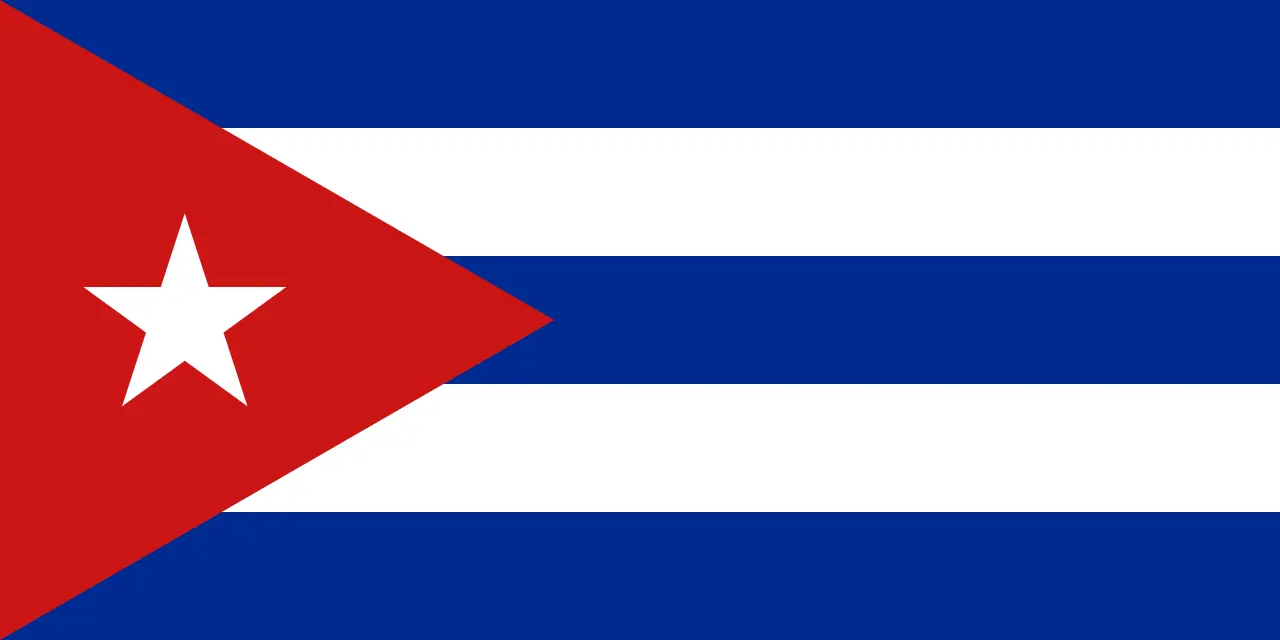
Cuban President Miguel Díaz-Canel used a mid-May 2026 televised cadence—picked up internationally—to insist the island retains an absolute and legitimate right to marshal conventional defenses if Washington escalates from sanctions rhetoric toward strikes, while simultaneously denying that Havana seeks a wider war or poses an offensive threat to Florida or Guantánamo Bay.
Al Jazeera’s English report on the exchange underscored the semantic tightrope: deterrence framed as international-law self-help, not revanchism, paired with vivid warnings that any US attack would produce a bloodbath with regional spillover—language aimed as much at Latin American capitals and UN corridors as at domestic morale inside a blackout-prone economy.
The proximate fuse in US media was an Axios-sourced narrative, amplified across American cable and wire pickups, that Cuba had stockpiled triple-digit counts of one-way drones from Russian and Iranian supply lines and could theoretically vector them toward US Navy traffic, the Guantánamo enclave, or south Florida infrastructure. Havana’s foreign ministry and presidency channels dismissed those tallies as a pretext for a blockade-plus-bombing storyline Washington has rehearsed before; independent verification of order-of-battle figures was not in the public satellite-evidence window most desks could cite on deadline.
Yahoo News’ AFP-led summary the same week paired Díaz-Canel’s “bloodbath” conditional with fresh US Treasury designations against Cuban intelligence leadership—evidence that the Biden-era détente toolkit is fully gone and that the Trump team is stacking financial strangulation on top of kinetic signalling.
How January’s White House emergency text shapes May’s shouting match
On 29 January 2026 the White House published a formal determination that Cuba’s government poses an unusual and extraordinary threat to US national security, foreign policy, and economy—language that unlocks sweeping IEEPA powers and tells courts, banks, and allies that coercive measures sit inside recognised executive-branch authority rather than ad hoc Twitter policy.
That document alleges alignment between Havana and US-designated adversaries, references intelligence cooperation with Moscow, and paints domestic repression as part of the threat matrix. Whether one treats every bullet as courtroom-grade fact or as political indictment, it is the statutory backbone under which Treasury, Commerce, and Justice can keep tightening screws while the Pentagon’s Southern Command briefers entertain contingency slides—exactly the atmosphere Díaz-Canel’s “legitimate defense” line is meant to puncture in global opinion.
What editors should separate from the fog machine
First, distinguish procurement rumours from demonstrated intent: stockpiling loitering munitions is not the same order of evidence as an approved target list. Second, separate Cuban civilian suffering under fuel and grid stress—already a 2026 news thread of its own—from the regime’s strategic communications; both can be true without collapsing into a single moral scorecard.
Until open-source imagery firms publish geolocated hangar counts or a US official shows lawmakers classified annexes on the record, the defensible publish lane stays with attributed claims, humanitarian baselines, and the diplomatic question of who benefits from panic about Caribbean drones when Middle Eastern theatres already consume US air-defence capacity.
Geography and themes
Related places and recurring themes for this story.
- Cuba
- United States
- World
- US–Cuba relations
Suggested reading
Other stories that pair well with this one—often from the same section or on overlapping themes.
United States reported to weigh indictment of Raúl Castro over 1996 Brothers to the Rescue shootdown
Syndicated May 2026 accounts attributed to a Justice Department official described prosecutors moving toward charges tied to the downing of two unarmed aircraft on 24 February 1996; a grand jury and any custody path would still face high legal and diplomatic hurdles.
U.S. indicts Raúl Castro over 1996 plane shootdown
Federal prosecutors in Miami unsealed murder and conspiracy charges against the 94-year-old former Cuban leader for his alleged role in downing two civilian aircraft.
DR Congo Ebola surge: six Americans exposed, one symptomatic, as WHO declares international emergency
The eastern Ituri outbreak is tied to Bundibugyo virus disease—no approved vaccine or drug for that species; CBS-linked sources told the BBC six US citizens were exposed and one may have symptoms, while the CDC weighs safe withdrawal and tighter border screening.
Aftenposten Modi Cartoon Stirs Racism Row
Aftenposten ran Halleraker’s cartoon the same day as Rossavik’s Meninger column; Red MP Rana called it racist; political editor Alstadheim told Dagbladet the symbols backed Rossavik’s point and were not meant to demean.
Cooper presses Gulf partners to reopen Hormuz routes farmers need for fertiliser
Britain’s foreign secretary has tied Iran’s disruption of the strait to fertiliser reaching African fields and wider prosperity, while parallel reporting documents urea spikes, stuck cargoes, and UN hunger modelling that treat the next planting cycles as the clock that matters.
Tehran floats Hormuz tolls on subsea internet cables as IRGC-tied media talk billions
Euronews and RFE/RL trace how Tasnim- and Fars-style outlets are packaging seabed leverage—transit fees, forced maintenance clauses, even cloud-giant localisation demands—while Mostafa Taheri, an Iranian parliamentary industries voice, throws around a headline revenue ceiling on the order of fifteen billion dollars annually that markets treated as rhetoric, not an invoice.
Tehran markets a ‘Hormuz Safe’ lane that settles marine cover in Bitcoin as war-risk premiums bite
Indian and trade-press explainers describe a new Iranian digital platform pitching blockchain-settled policies for commercial hulls threading the strait—complete with ministry talk of a ten-billion-dollar revenue ceiling—while compliance lawyers warn U.S. and EU persons that paying premiums into Iranian rails can still collide with sanctions law regardless of coin type.
Trump delays Iran strike after Gulf appeal
President Donald Trump said late on 18 May 2026 in Washington that he was postponing a U.S. military strike on Iran that had been scheduled for the following day after Qatar, Saudi Arabia, and the United Arab Emirates asked for time while diplomacy continued; he also told the armed forces to stay ready for a large-scale assault if talks fail.
Brazil’s TRF-1 faces a reckoning on whether Belo Sun’s Volta Grande gold license snaps back to freeze
After a single federal appellate judge revived the Canadian miner’s installation permit in February 2026, prosecutors appealed to the same court’s Sixth Panel—where the next collegiate ruling decides if the decade-old suspension logic from 2017 returns or the Pará project keeps rolling.
Kenya’s matatu shutdown over pump prices turns lethal as ministers report four dead
Interior Cabinet Secretary Kipchumba Murkomen’s tally—four killed, dozens hurt, and hundreds detained—lands atop a nationwide minibus strike that BBC reporting ties to another double-digit jump in regulated diesel and petrol caps.
Keep exploring
Browse the full archive or return to the front page.
Sources and external links
Sources and filings our editors consulted to verify this story. External links open in a new tab.