Section World
Trump delays Iran strike after Gulf appeal
President Donald Trump said late on 18 May 2026 in Washington that he was postponing a U.S. military strike on Iran that had been scheduled for the following day after Qatar, Saudi Arabia, and the United Arab Emirates asked for time while diplomacy continued; he also told the armed forces to stay ready for a large-scale assault if talks fail.
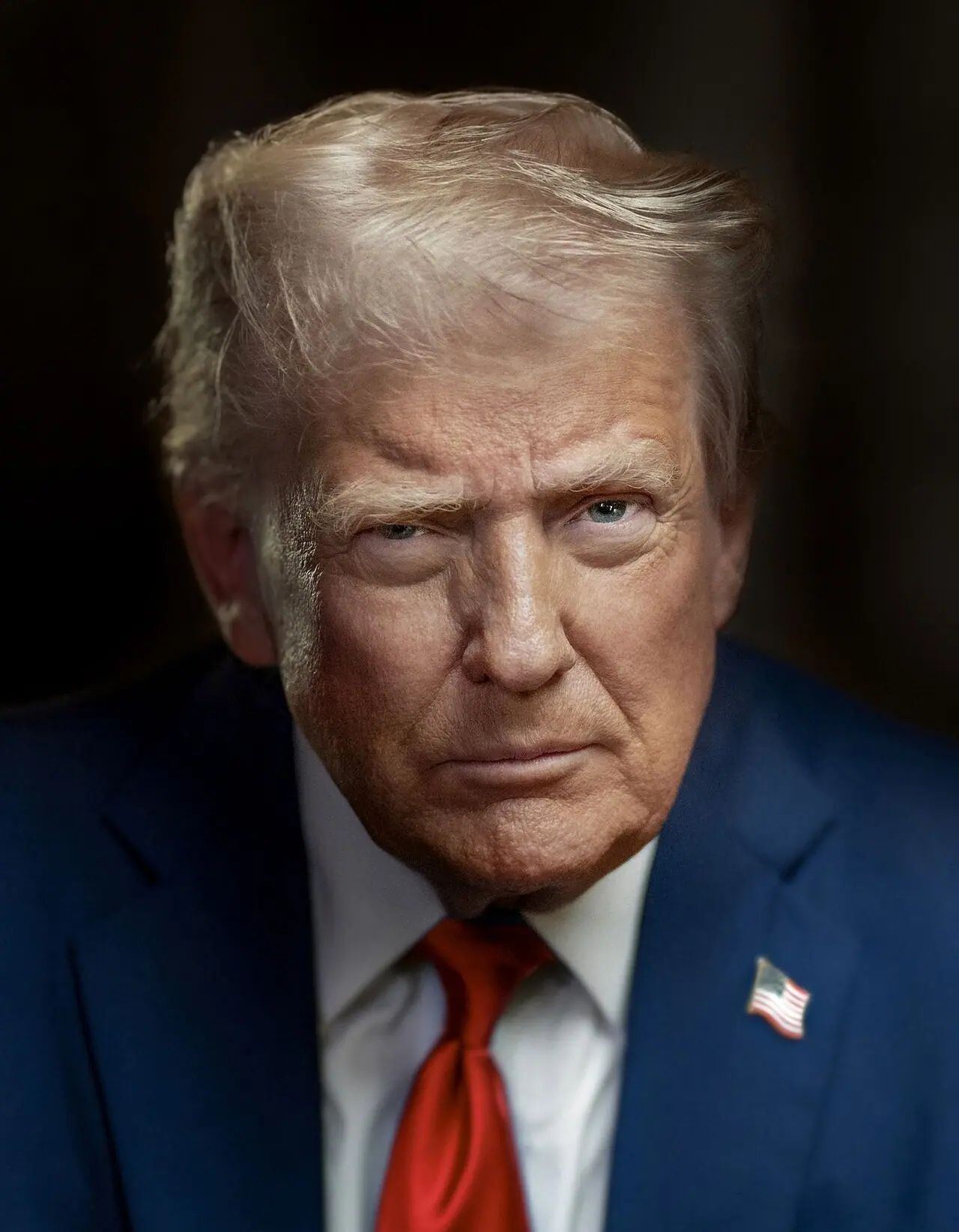
United States President Donald Trump said he would “hold off on our planned Military attack of the Islamic Republic of Iran, which was scheduled for tomorrow,” naming Qatar, Saudi Arabia, and the United Arab Emirates as the Gulf capitals that had asked him to pause while they believed a deal remained possible, in a Truth Social post on the night of 18 May 2026 Washington time.
The line is the public trigger for the story: a head-of-state message that simultaneously halts a described strike clock and keeps coercive pressure in view for allies, adversaries, and energy markets reading the same timestamp.
In the same post, Trump characterised the outcome he still wanted as including no nuclear weapons for Iran, and said he had told the U.S. military it would not execute the scheduled strike while remaining prepared for a “full, large scale assault” on short notice if negotiations failed to produce an outcome he would accept.
That pairing—diplomatic pause plus orders to stay ready on short notice—is the policy nut: it gives regional mediators a narrow window without resolving how long the pause lasts, what written terms would satisfy Washington, or how Tehran interprets the ultimatum layer against the olive-branch sentence. The public record quoted here does not, on its own, establish classified strike timelines or national military orders beyond what Trump chose to disclose.
Why three Gulf states at this moment
Qatar, Saudi Arabia, and the UAE each host U.S. forces, export hydrocarbons through chokepoints insurers treat as war-sensitive, and sit between Iranian missile reach and American power-projection hubs. When a U.S. president says those governments personally intervened to stop a strike hours before a notional Tuesday execution, the diplomatic readout matters as much as the kinetic one: it signals that key Arab capitals still prefer a negotiated off-ramp to another round of strikes that could ripple through Hormuz shipping premiums and civilian overflight rules even when battlefield tempo has slowed.
Coverage through May 2026 had already sketched, for readers following the file, a late-February 2026 widening of direct U.S.–Iran strikes, an April ceasefire frame, and mediator traffic—including Pakistan-hosted contacts—running alongside sporadic drone and missile headlines elsewhere in the Gulf.
How early filings framed the same beat
AFP Washington copy carried by France24 and RFI foregrounded the same direct quotation about holding off the “planned Military attack” and named the three Gulf leaders Trump said had called him. Al Jazeera’s concurrent live file folded the item into a dense chronology of strikes, air-defence alerts, and energy-market headlines—stronger on sequence than on standalone verification of any specific strike package, but useful for readers who want adjacent timestamps when the social post is read as one line in a longer diary.
Where the summaries diverge is emphasis, not the core claim Trump himself published: broadcast-led pages led with the postponement sentence; the liveblog treated it as one update among many moving parts.
What to watch next
Written proposals moving through mediators, any confirmed change in U.S. carrier or tanker tasking, Israeli cabinet language on strike authorities, Iranian parliamentary or supreme-leadership statements on enrichment caps, and Lloyd’s-market style shifts in Hormuz war-risk clauses typically lag a presidential post but outlast it. Those are the practical follow-ons that test whether “hold off” becomes a durable ceasefire bridge or a short gap before renewed strikes.
Geography and themes
Related places and recurring themes for this story.
- United States
- Iran
- Saudi Arabia
- United Arab Emirates
- Qatar
- Politics
Suggested reading
Other stories that pair well with this one—often from the same section or on overlapping themes.
Why America feels split—and why the world can’t agree on the United States
Census and World Bank population lines, Pew’s partisan and trust batteries, inequality in the World Bank Gini series, and Pew’s Spring 2024 global snapshot: one country’s domestic fracture sitting next to a median foreign public that still tilts favourable—just not everywhere.
Trump on Truth Social: Iran’s “clock is ticking,” move “FAST,” or “there won’t be anything left of them”
Agency-backed outlets reported on 17 May 2026 that U.S. President Donald Trump posted a capitalised ultimatum to Tehran on Truth Social amid fragile Gulf ceasefire diplomacy, quoting him verbatim as tying speed on a deal to survival while pairing the message with a reported call to Israeli Prime Minister Benjamin Netanyahu.
US–Iran war in the Middle East: who is involved, what each country is doing, and how they are affected
A widening U.S.–Iran war is fought with missiles and sanctions but lived through shipping insurance, food prices, refugee routes, and alliance politics from Manama to Mumbai—this is a full tour of the chessboard, not a scorecard of two capitals alone.
Gerardo Mérida Sánchez, ex–Sinaloa security secretary, arrested in Arizona in U.S. cartel conspiracy case
Federal prosecutors in Manhattan had already named Gerardo Mérida Sánchez in an April 2026 indictment alongside Sinaloa’s sitting governor and eight other Mexican officials when U.S. Marshals took him into custody after he crossed into Nogales, Arizona; he was later arraigned in New York and pleaded not guilty as Mexico’s cabinet confirmed Washington held him.
FBI maintains $200,000 reward for former US counterintelligence agent Monica Witt over Iran espionage charges
The former Air Force intelligence specialist remains a fugitive after defecting to Iran in 2013 and allegedly handing over highly classified national defense information.
Revised Iranian proposal to end war shared with U.S., Pakistani source says
Prime Minister Shehbaz Sharif told a public event in Islamabad that Pakistan had received Iran’s written answer to Washington’s latest peace text, while Iranian state outlets framed the document around stopping the war and reopening shipping. Wire dispatches citing a Pakistani government official involved in mediation said the material was passed onward to the United States the same day.
Post analysis of satellite imagery ties Iranian strikes to damage or loss of at least 228 U.S. structures or pieces of equipment
A Washington Post investigation published in early May 2026 says it catalogued hangars, barracks, fuel sites, aircraft, and radar, communications, and air-defense assets hit across fifteen U.S. military locations in six Gulf and Levant partner states—arguing the tally dwarfs prior public U.S. disclosures while documenting how commercial imagery gaps and Iranian-published photos shaped what could be verified.
Barney Frank Dies at 86, LGBTQ Trailblazer
He came out in Congress in 1987, chaired Financial Services through the 2008 crash, and helped steer Dodd-Frank before retiring in 2013; his sister confirmed his death to NBC Boston.
Trump-Backed Gallrein Ousts Massie in Kentucky
Ed Gallrein, backed by Donald Trump, ousted libertarian-leaning Rep. Thomas Massie in Kentucky's May 19 GOP primary for the 4th District—the costliest House primary on record.
Wyden: DOJ May Halt Trump IRS Audits
Senate Finance Chair Ron Wyden warns reported Justice Department settlement language could halt IRS audits of older Trump-family returns; CNN, ABC, the Post, and CNBC describe overlapping terms tied to the tax-leak lawsuit.
Keep exploring
Browse the full archive or return to the front page.
Sources and external links
Sources and filings our editors consulted to verify this story. External links open in a new tab.