Section World
Tehran markets a ‘Hormuz Safe’ lane that settles marine cover in Bitcoin as war-risk premiums bite
Indian and trade-press explainers describe a new Iranian digital platform pitching blockchain-settled policies for commercial hulls threading the strait—complete with ministry talk of a ten-billion-dollar revenue ceiling—while compliance lawyers warn U.S. and EU persons that paying premiums into Iranian rails can still collide with sanctions law regardless of coin type.
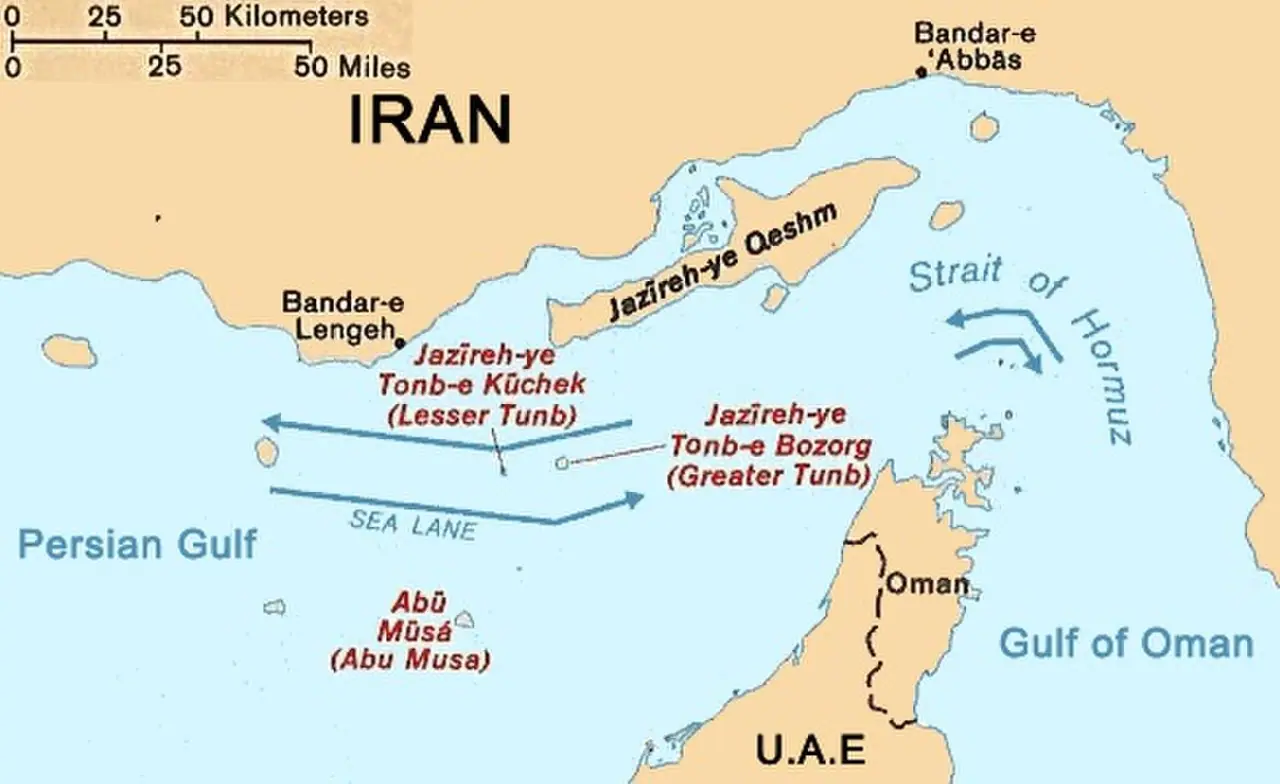
Iranian economic ministries and state-adjacent digital teams are pitching Hormuz Safe—branded in English copy as a maritime “safe corridor” insurance wrapper—for owners who still need a financial-responsibility certificate before insurers or charterers will let them earn freight through a strait where war-risk clauses have repriced faster than hulls can rebalance ballast.
Times of India’s mid-May 2026 explainer, mirroring crypto-trade headlines the same week, says the stack is meant to settle premiums and claims flows in Bitcoin, using on-chain verification as the receipt layer Western correspondent banks refuse to touch. PortNews’s industry note adds the eye-catching macro line Tehran attaches to the idea: roughly $10 billion in annual premium-like revenue if enough tonnage opted in—an order-of-magnitude talking point, not an audited book of business.
CryptoBriefing’s filing summarises the product shape for token-native readers: digital policies covering administrative risks—cargo inspections, detentions, legal confiscations—in language that explicitly walks around kinetic-war damage, which traditional underwriters often carve out anyway. That framing matters because it tells shipowners what they are not buying while still marketing peace of mind.
The same cluster of stories notes why Bitcoin rather than euros: sanctions architecture still treats Iranian counterparties as toxic to SWIFT-style messaging, so a public-chain rail is as much a jurisdictional arbitrage attempt as a fintech flex.
Why compliance desks yawn at the coin and panic at the counterparty
In the May 2026 English-language rollout reviewed here, U.S. Treasury’s Office of Foreign Assets Control rules do not care whether a premium is labelled dollars, dirhams, or satoshis if the beneficial recipient is a blocked person or if the transaction materially benefits Iran’s government. London and Singapore compliance manuals therefore treat “crypto-settled Iranian insurance” as a sanctions questionnaire item first and a marine risk item second.
That sequencing explains why early English-language write-ups hedged on operational status—some noted placeholder web pages or thin technical annexes—while still amplifying the geopolitical headline. For masters and chartering desks, the actionable read is whether any Protection and Indemnity club or mortgagee will recognise the certificate in a casualty arbitration, not whether a blockchain explorer shows a transaction hash.
What would change the story from stunt to standard form
If Lloyd’s Market Association or a major International Group P&I club published a circular accepting Hormuz Safe certificates as equivalent evidence of financial responsibility, the product would graduate overnight from blog copy to clause text. Short of that, owners face a bifurcated market: politically exposed charterers may refuse on sanctions grounds while opportunistic tramp operators might gamble for a discount freight.
Port throughput statistics, insurer rate filings, and flag-state circulars—not press-release adjectives—are the indicators that should move editors off launch rhetoric and into evidence of uptake.
Honest limits on what this desk can certify from offshore
None of the open-source pages reviewed here grant access to Iranian policy forms, capital adequacy tests, or reinsurance treaties. Without those, characterise Hormuz Safe as an announced platform with a stated settlement rail, not as a rated carrier with a known solvency margin.
Readers deserve that humility because Hormuz risk already travels through oil volatility, defence budgets, and refugee headlines. Adding a thinly documented insurance token layer without caveats would mostly amplify anxiety rather than underwriting clarity.
Geography and themes
Related places and recurring themes for this story.
Suggested reading
Other stories that pair well with this one—often from the same section or on overlapping themes.
Cooper presses Gulf partners to reopen Hormuz routes farmers need for fertiliser
Britain’s foreign secretary has tied Iran’s disruption of the strait to fertiliser reaching African fields and wider prosperity, while parallel reporting documents urea spikes, stuck cargoes, and UN hunger modelling that treat the next planting cycles as the clock that matters.
Tehran floats Hormuz tolls on subsea internet cables as IRGC-tied media talk billions
Euronews and RFE/RL trace how Tasnim- and Fars-style outlets are packaging seabed leverage—transit fees, forced maintenance clauses, even cloud-giant localisation demands—while Mostafa Taheri, an Iranian parliamentary industries voice, throws around a headline revenue ceiling on the order of fifteen billion dollars annually that markets treated as rhetoric, not an invoice.
Aftenposten Modi Cartoon Stirs Racism Row
Aftenposten ran Halleraker’s cartoon the same day as Rossavik’s Meninger column; Red MP Rana called it racist; political editor Alstadheim told Dagbladet the symbols backed Rossavik’s point and were not meant to demean.
Trump delays Iran strike after Gulf appeal
President Donald Trump said late on 18 May 2026 in Washington that he was postponing a U.S. military strike on Iran that had been scheduled for the following day after Qatar, Saudi Arabia, and the United Arab Emirates asked for time while diplomacy continued; he also told the armed forces to stay ready for a large-scale assault if talks fail.
Havana leans on self-defense law while rejecting US drone-strike talk as intervention pretext
President Miguel Díaz-Canel framed military deterrence as a lawful shield, not a war wish, after US-facing outlets amplified an Axios-style tally of imported drones; Washington’s January national-emergency declaration on Cuba still frames the island as an extraordinary threat.
Brazil’s TRF-1 faces a reckoning on whether Belo Sun’s Volta Grande gold license snaps back to freeze
After a single federal appellate judge revived the Canadian miner’s installation permit in February 2026, prosecutors appealed to the same court’s Sixth Panel—where the next collegiate ruling decides if the decade-old suspension logic from 2017 returns or the Pará project keeps rolling.
Kenya’s matatu shutdown over pump prices turns lethal as ministers report four dead
Interior Cabinet Secretary Kipchumba Murkomen’s tally—four killed, dozens hurt, and hundreds detained—lands atop a nationwide minibus strike that BBC reporting ties to another double-digit jump in regulated diesel and petrol caps.
Tarsus rampage leaves six dead and eight wounded as police scour Mersin for gunman
International outlets describe multiple shooting sites in southern Türkiye’s Tarsus district, a helicopter-backed manhunt, and a Cabinet-room toll readout from President Erdoğan while wire-sourced reporting sketches an alleged domestic-violence start and street-to-car attacks.
Hargeisa fills its 18 May squares with a post-recognition parade as Herzog seals the envoy link
Nairobi- and Tel Aviv–linked reporting described thousands in Hargeisa for the usual independence anniversary—this time under the glare of December 2025’s Israeli recognition—while President Isaac Herzog formally received Somaliland’s first ambassador in Jerusalem the same diplomatic window.
Trump on Truth Social: Iran’s “clock is ticking,” move “FAST,” or “there won’t be anything left of them”
Agency-backed outlets reported on 17 May 2026 that U.S. President Donald Trump posted a capitalised ultimatum to Tehran on Truth Social amid fragile Gulf ceasefire diplomacy, quoting him verbatim as tying speed on a deal to survival while pairing the message with a reported call to Israeli Prime Minister Benjamin Netanyahu.
Keep exploring
Browse the full archive or return to the front page.
Sources and external links
Sources and filings our editors consulted to verify this story. External links open in a new tab.