Section Technology
Musk–OpenAI civil trial reaches jury deliberations in Oakland after closing arguments
A nine-person Northern District of California jury began weighing breach and unjust-enrichment claims in May 2026 after roughly three weeks of testimony over how OpenAI moved from nonprofit charter language to a capped-profit structure partnered with Microsoft.
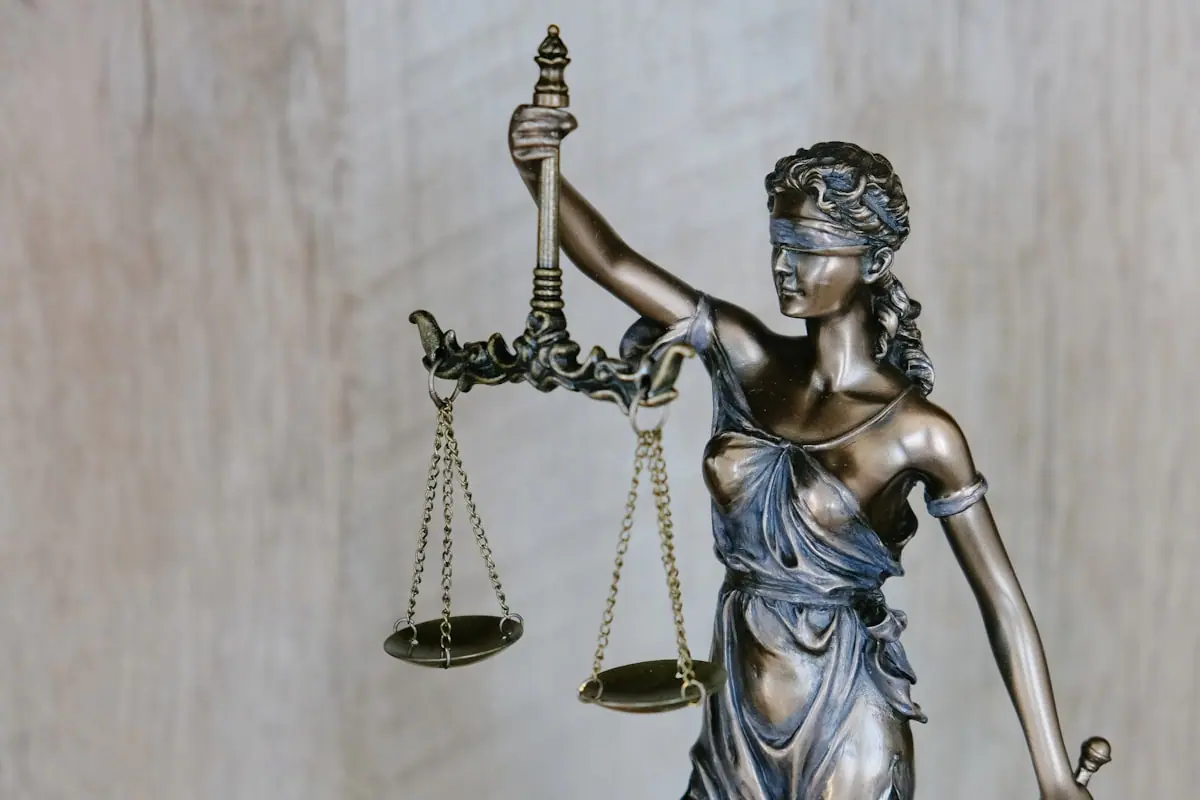
Closing arguments on 14 May 2026 in Oakland, California, capped roughly three weeks of testimony in a federal bench trial in which Elon Musk accuses OpenAI, Sam Altman, and related defendants of departing from a nonprofit-first mission tied to a lab publicly launched in 2015, then commercialising frontier models in ways that allegedly denied him upside while the company raised billions alongside Microsoft and other partners.
A nine-person civil jury must now translate weeks of email exhibits, governance decks, and dueling credibility narratives into answers on breach, unjust enrichment, and any surviving companion counts. The proceeding is private litigation—it does not by itself rewrite AI regulation—but M&A and venture counsel are watching for money damages or narrow injunctive language that could influence how other labs document control transfers and side letters when they spin up for-profit subsidiaries.
How plaintiff counsel framed the chronology
| Pillar | Argument shape on the public record |
|---|---|
| Mission reliance | Early materials described AGI development as a trust-like public benefit; later capped-profit and partnership moves allegedly shifted returns toward insiders |
| Economic reliance | Musk says talent and capital were contributed on representations about governance and participation rights |
| Competitive overlay | His xAI venture appears either as continued belief in the mission—or, in the defence telling, as motive to impair a stronger rival |
Plaintiff rhetoric in open court pointed toward disgorgement-style remedies tied to commercialised models, signalling that money—not only declaratory relief—could follow if jurors credit the narrative.
How the defence recast the same timeline
OpenAI lawyers portrayed Musk as an early supporter who stepped back, then sought to recapture leverage after the consumer chat breakout changed valuations. They introduced testimony from other co-founders and customers aimed at showing board decisions were minuted, capital raises were disclosed, and that converting economic structure was necessary to fund frontier-scale compute.
Defence themes invited jurors to read messy governance fights as credibility contests rather than as clean fraud patterns—pushing the panel toward how much contemporaneous documents outweigh later characterisations.
Witness threads that structured the trial story
| Thread | Why jurors heard it |
|---|---|
| Co-founder testimony | Who controlled product direction when APIs and consumer apps scaled |
| Hyperscaler customer | A senior Microsoft executive testified on dependency, pricing, and how enterprise contracts were negotiated |
| Former chief scientist | Ilya Sutskever’s appearance fed questions about safety governance under commercial pressure |
| Private correspondence | Chains on board votes, SAFE rounds, and side letters supported both transparency and selective-memory arguments |
None of that decides law for the whole sector, but it supplied a cast list beyond the two headline executives.
Remedies outsiders watch for
| Remedy class | Why it matters beyond the parties |
|---|---|
| Money damages | Jury line items on “benefits received” could influence how labs value early contributor claims |
| Constructive-trust rhetoric | Arguments about redirecting upside toward nonprofit arms could spook limited partners |
| Narrow governance orders | Any injunction touching board process would trigger compliance reviews at other venture-backed research companies |
A defence-friendly outcome would reinforce norms that repeat SAFE signers assume conversion risk; a plaintiff tilt could embolden other early funders to litigate when subsidiaries mint equity.
What the docket will show after the jury retires
Watch for read-backs of exhibits, special-verdict answers, judgment-as-a-matter-of-law motions filed within days of a partial or full verdict, and redaction fights on appeal over partnership economics. Sealed cap-table attachments could resurface if either side challenges protective orders tied to Microsoft-linked deal documents.
Suggested reading
Other stories that pair well with this one—often from the same section or on overlapping themes.
Google CLI Links OpenClaw to Gmail Unsupported
Google's open-source Workspace CLI on GitHub links AI agents including OpenClaw to Gmail and Drive, but the company labels the project unsupported and warns workflows may break as APIs evolve.
Google I/O 2026 Pushes Always-On Gemini Agent
Google I/O 2026 in Mountain View spotlighted Gemini Spark, described as an always-on personal agent across Workspace and other apps—with user approval before sensitive actions—plus faster Gemini models, agentic Search, and Android XR hardware.
Claude Code Auto Mode routes risky tool calls through a Sonnet 4.6 classifier instead of endless taps
Anthropic’s March 2026 engineering deep dive frames Auto Mode as permission automation: a two-stage transcript filter plus a prompt-injection probe, built after internal telemetry showed users accepting 93% of manual prompts anyway.
Anthropic’s Q1 2026 growth reads near 80× in markets coverage; Semi Analysis tallies put ARR above $44 billion
Benzinga and syndicated Fortune copy captured chief executive Dario Amodei calling the pace “too hard to handle” around an 80-fold quarterly surge narrative, while a Semi Analysis digest summarized by trade press puts annualized run-rate revenue above $44 billion after a climb from about $9 billion at year-end 2025.
Revolut rolls out a physical Dogecoin-branded card in the U.K. and wider EEA
The neobank’s first crypto-culture plastic works on Visa and Mastercard rails, pairs with Apple Pay and Google Pay in supporting setups, and leans on fiat balances even as the artwork leans on DOGE memes; Own The Doge licensing framed charity tie-ins in launch copy.
Anthropic buys Stainless, the API-to-SDK toolchain rivals including OpenAI and Google relied on
The 2022 New York startup led by former Stripe engineer Alex Rattray automated libraries across Python, TypeScript, Kotlin, Go, and Java; Anthropic confirms it will wind down hosted products for other vendors while letting past customers keep generated code.
Walmart’s six new Onn Android 16 tablets from $97: spec sheet, who they beat, and who should skip them
Launch-day listings describe Android 16 across the stack—from a 7-inch Helio G80 starter through a 13-inch Pro bundle with stylus—but paper wins still need reality checks against Amazon’s Fire line, Lenovo’s budget slabs, and discounted Samsung Tab hardware.
UK AI Security Institute publishes Mythos Preview cyber scores: 73% on expert CTFs, first model to finish a 32-step range in three of ten runs
AISI’s 13 April 2026 write-up summarises controlled evaluations of Anthropic’s Claude Mythos Preview on capture-the-flag tasks and on “The Last Ones,” a 32-step simulated corporate intrusion; Opus 4.6 remains the nearest comparator on the multi-step range but trails on step count.
Oakland jury shuts Musk’s OpenAI fight on a clock question, not the ‘betrayed lab’ plot
Nine Northern District jurors agreed the February 2024 filing landed outside the limitations window they were instructed to use; Judge Yvonne Gonzalez Rogers still formalises the advisory result, but the merits of charitable-trust and enrichment theories never went to a second-phase verdict.
Calif’s Mythos-on-M5 kernel exploit story gains an official Apple footnote in macOS Tahoe 26.5 security credits
Calif still narrates seven-day lab work with Memory Integrity Enforcement on macOS 26; Apple’s catalogue page for Tahoe 26.5 now lists CVE-2026-28952 as reported by Calif.io in collaboration with Claude and Anthropic Research—a narrower confirmation than Calif’s full chain narrative but stronger than silence.
Keep exploring
Browse the full archive or return to the front page.
Sources and external links
Sources and filings our editors consulted to verify this story. External links open in a new tab.