Section Business
Samsung Electronics and union return to government-mediated pay talks as Thursday strike deadline nears
A second post-mediation round at the National Labor Relations Commission in Sejong opened on Monday with the union still warning of an 18-day walkout from Thursday; talks follow an earlier collapse and a partial court injunction limiting how far pickets can disrupt safety-critical plant work.
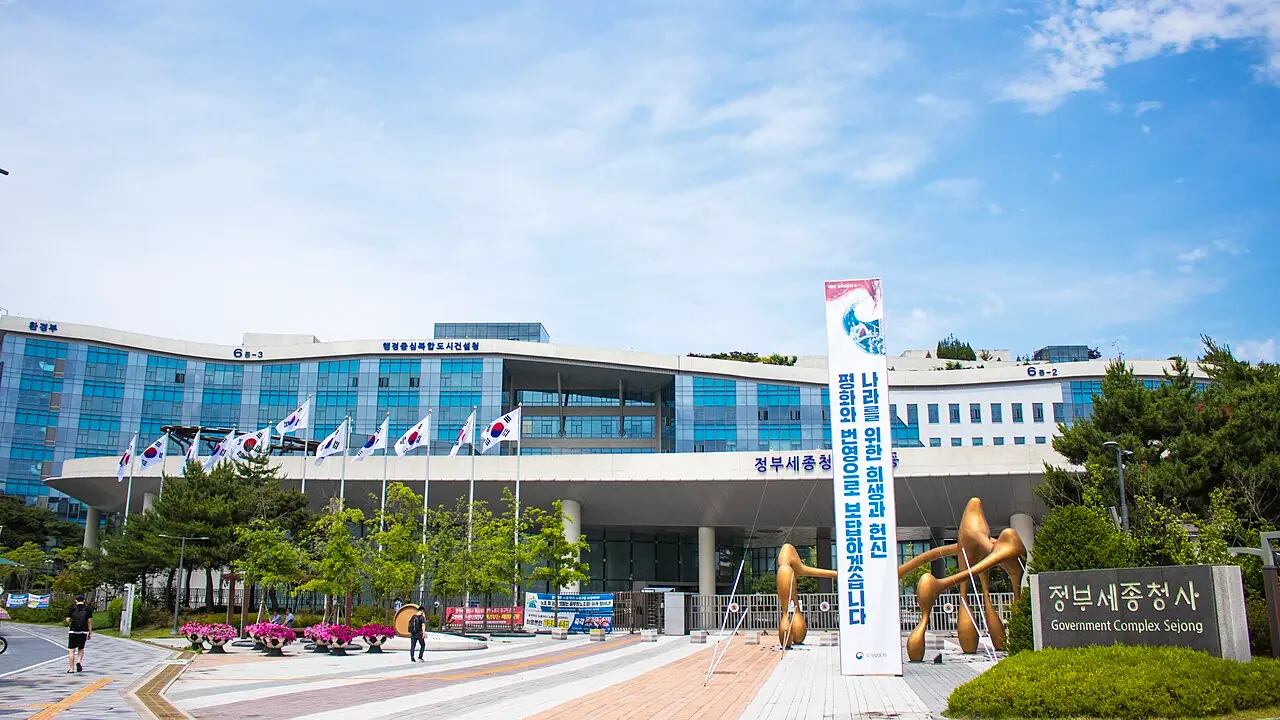
Samsung Electronics and its in-house labour union met again on Monday 18 May 2026 under government mediation at the National Labor Relations Commission (NLRC) in Sejong. The NLRC is the state panel Korean law routes many private-sector pay disputes through when direct bargaining stalls; Monday’s hearing was framed as a last stretch before a walkout the union has said would start Thursday and last 18 days, through 7 June.
Reporting has described turnout on the order of tens of thousands of members if the stoppage proceeds—figures in that band align with the union’s scale at Korea’s largest electronics employer, though day-one attendance will not be certain until gates open.
Desk schedules billed the sitting as a second post-mediation round: the parties already went through an NLRC-led track and long management–union sessions without signing an annual wage-and-bonus pact. NLRC chair Park Soo-geun told reporters the Monday block would run into the evening and resume Tuesday morning while negotiators still traded opening numbers, with firmer offers expected later in the week if the process holds.
What collapsed before Monday’s return
Bonus math and transparency
The union’s published demands, as summarised in press accounts, cluster around three money-and-governance themes. One is a union push to earmark about 15% of operating profit for a bonus pool so payouts rise when the company’s headline earnings do, not only when management chooses discretionary pots.
A second theme is transparency: workers want clearer rules on how individual performance pay is calculated so line employees can audit whether targets and weights match what they hear in town-hall slides. A third is relief on a 50% ceiling understood to cap how large incentive packages can grow relative to base annual salary—union negotiators argue the cap dulls upside when workloads spike in peak fab seasons.
Samsung’s public line has been cautious about locking multi-year formulas into a contract. Management spokespeople have said outsized rewards should follow a durable return to undisputed leadership in memory and foundry markets, not automatic triggers that could strain cash in a down cycle. That gap—formula versus discretion—is the substantive wedge behind the strike threat, not only headline percentages.
Political heat and emergency rhetoric
After the earlier collapse, South Korea’s labour minister pressed both sides back to the table, a reminder that Seoul treats big-tech stoppages as national-risk events, not a private HR matter. Over the same weekend the prime minister’s office floated language about possible emergency adjustment powers if talks failed again.
Union leaders attacked that wording as a signal the state might lean on workers mid-dispute, not only on management. The exchange widened the story from Samsung’s payroll to a broader question—how far the centre-right government will go to keep chip lines humming when unions test their leverage—and that political heat now sits beside the spreadsheet fight in every mediation readout.
Court guardrails and what still moves Thursday
Partial injunction
Suwon District Court handed Samsung a partial win on strike tactics while leaving the core calendar question open. According to reporting on the order, judges barred workers from obstructing safety-related infrastructure—fire prevention, exhaust, drainage—and from occupying buildings or running physical blockades that could strand crews inside plants.
The ruling did not read as a blanket ban on all picketing or all downtime. Union-side counsel told reporters the decision still allows sharply thinned weekend-style rosters that would slow throughput even if “critical” systems stay staffed, a framing management disputes when it insists on normal crewing levels. Readers should treat production impact as scenario-dependent until either side publishes shift tables or customers confirm allocation changes.
Company and union lines in public
Samsung’s internal bulletins have stressed that safety and security work must remain at ordinary staffing through any strike window, rejecting union arguments that “normal” could legally mean skeleton holiday crews. The company’s aim is to keep courts and regulators from seeing a stoppage as a safety incident as well as an economic one.
The union said it would respect the injunction’s limits while keeping Thursday’s start date on the table, arguing the court did not freeze the overall walkout plan—only certain tactics. That pairing—compliance on paper plus a public countdown—sets up the next news beat: whether mediation narrows the strike scope before gates are tested.
Why export watchers care
Samsung sits at the centre of South Korea’s semiconductor and handset export machine; even rough cuts to wafer starts or packaging shifts ripple into memory spot quotes, smartphone build plans, and tier-one customer allocations within weeks.
An 18-day window straddles late May and early June, when many electronics brands finalise northern-summer sell-in. Analysts who model supply chains will watch fab utilisation and shipment notices more than picket-line headcounts, but the company has not published line-by-line loss guidance tied to this dispute.
The NLRC’s choreography—sequenced mediation, chair Park’s doorstep quotes, and presidential social posts urging a “wise” settlement—shows how tightly the Blue House links national credibility to whether Thursday becomes a quiet extension of talks or the first day of a disciplined multi-site stoppage. The economics story and the politics story now share one clock.
Geography and themes
Related places and recurring themes for this story.
- South Korea
- Economy
- Technology
Suggested reading
Other stories that pair well with this one—often from the same section or on overlapping themes.
China’s chip ‘Big Fund’ said to be in pole position to lead DeepSeek’s first outside raise near a $45 billion tag
Financial Times–sourced reporting summarized in trade press puts the China Integrated Circuit Industry Investment Fund in talks to anchor a maiden external round for the Hangzhou lab, with Tencent and Alibaba still circling co-investor slots while Reuters-style wires floated a higher $50 billion ceiling.
Samsung Electronics union plans 18-day strike from 21 May after South Korean wage talks stall
After National Labour Relations Commission mediation collapsed on 13 May 2026, Samsung Electronics’ South Korean union still plans an 18-day walkout from 21 May over bonus rules it says trail SK Hynix; Seoul’s prime minister called an emergency ministerial huddle while JPMorgan sketched a multi-trillion-won operating-profit hit if participation matches union forecasts.
Google CLI Links OpenClaw to Gmail Unsupported
Google's open-source Workspace CLI on GitHub links AI agents including OpenClaw to Gmail and Drive, but the company labels the project unsupported and warns workflows may break as APIs evolve.
Google I/O 2026 Pushes Always-On Gemini Agent
Google I/O 2026 in Mountain View spotlighted Gemini Spark, described as an always-on personal agent across Workspace and other apps—with user approval before sensitive actions—plus faster Gemini models, agentic Search, and Android XR hardware.
Mayo Clinic validation work shows REDMOD AI spotting pancreatic cancer on CTs far ahead of usual reads
Decrypt’s April recap of the landmark study highlights up to a three-year lead in select cases; oncology trade write-ups of the same paper pin median detection near 475 days with 73% sensitivity versus roughly 39% for pooled radiologists on identical prediagnostic scans.
Claude Code Auto Mode routes risky tool calls through a Sonnet 4.6 classifier instead of endless taps
Anthropic’s March 2026 engineering deep dive frames Auto Mode as permission automation: a two-stage transcript filter plus a prompt-injection probe, built after internal telemetry showed users accepting 93% of manual prompts anyway.
Anthropic’s Q1 2026 growth reads near 80× in markets coverage; Semi Analysis tallies put ARR above $44 billion
Benzinga and syndicated Fortune copy captured chief executive Dario Amodei calling the pace “too hard to handle” around an 80-fold quarterly surge narrative, while a Semi Analysis digest summarized by trade press puts annualized run-rate revenue above $44 billion after a climb from about $9 billion at year-end 2025.
Revolut rolls out a physical Dogecoin-branded card in the U.K. and wider EEA
The neobank’s first crypto-culture plastic works on Visa and Mastercard rails, pairs with Apple Pay and Google Pay in supporting setups, and leans on fiat balances even as the artwork leans on DOGE memes; Own The Doge licensing framed charity tie-ins in launch copy.
Anthropic buys Stainless, the API-to-SDK toolchain rivals including OpenAI and Google relied on
The 2022 New York startup led by former Stripe engineer Alex Rattray automated libraries across Python, TypeScript, Kotlin, Go, and Java; Anthropic confirms it will wind down hosted products for other vendors while letting past customers keep generated code.
Sony signals first-party tentpole single-player games will stay off PC after years of delayed ports
Studio Business Group chief Hermen Hulst reportedly told staff in a May 2026 town hall—surfaced through Bloomberg’s Jason Schreier—that Sony Interactive Entertainment is done shipping its big narrative exclusives to Windows, while live-service titles such as Marathon and Marvel Tokon remain cross-platform.
Keep exploring
Browse the full archive or return to the front page.
Sources and external links
Sources and filings our editors consulted to verify this story. External links open in a new tab.