Section Business
Samsung Electronics union plans 18-day strike from 21 May after South Korean wage talks stall
After National Labour Relations Commission mediation collapsed on 13 May 2026, Samsung Electronics’ South Korean union still plans an 18-day walkout from 21 May over bonus rules it says trail SK Hynix; Seoul’s prime minister called an emergency ministerial huddle while JPMorgan sketched a multi-trillion-won operating-profit hit if participation matches union forecasts.
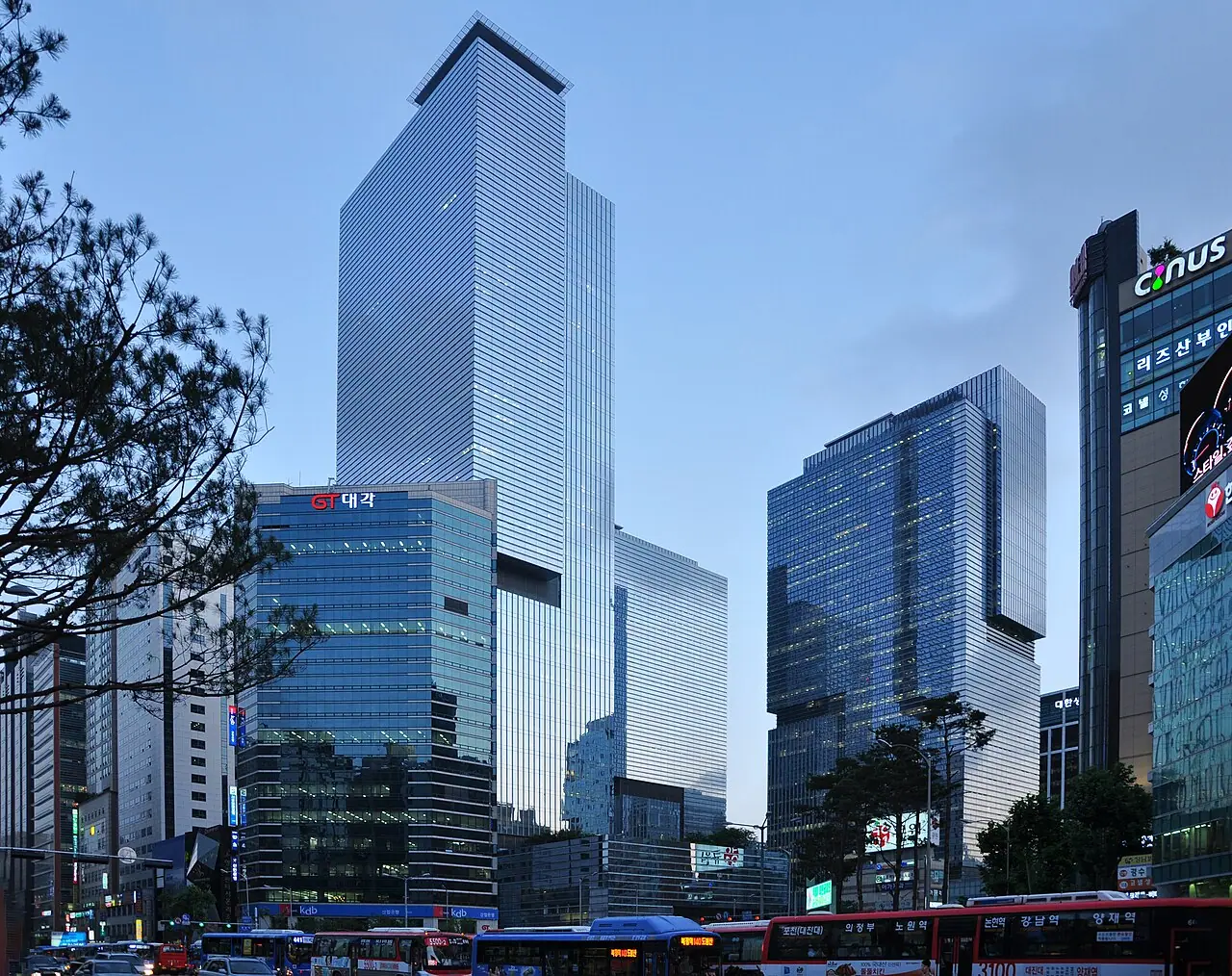
Samsung Electronics’ South Korean labour union—labour as in workplace organising, not the UK Labour Party—told reporters 15 May 2026 it would press ahead with an 18-day stoppage starting 21 May even after the company offered to resume pay talks without preconditions. That stance followed government-mediated sessions at the National Labour Relations Commission that CNA said ended without a deal on 13 May, when union negotiator Choi Seung-ho faulted management for offering only a one-off 2026 performance payment instead of rewriting bonus rules. Ordinary shares at one point slid about 5.9% intraday on 15 May before paring losses, while the wider KOSPI also weakened on chip exposure.
Prime Minister Kim Min-seok convened an emergency ministerial meeting 13 May instructing aides to manage the dispute’s “gravity” for the export-heavy economy, CNA reported; semiconductors alone accounted for about 37% of South Korean exports in April government data cited by the same outlet.
The union’s public asks include scrapping a bonus cap tied to half of annual base salary, steering about 15% of annual operating profit into a clearer bonus pool, and publishing transparent calculation rules—demands Samsung argues could crimp investment flexibility in future downturns if profit shares harden into entitlements. Rival SK Hynix scrapped its own bonus cap in September 2025, a comparator union rhetoric leans on when telling members SK bonuses can run multiples higher.
Union leaders simultaneously floated a return to structured talks—but only after 7 June—while keeping the May walkout calendar, a sequencing choice that keeps pressure on Seoul as the NLRC pressed for another mediated session the Saturday after the failed midweek round. Industry Minister Kim Jung-kwan warned 14 May that a strike could cause “irreparable” economic damage and that emergency arbitration might become unavoidable; only the labour minister may invoke that 30-day cooling-off tool, and Labour Minister Kim Young-hoon has so far stressed dialogue over compulsion.
What the union is bargaining over in public
| Theme | Union framing (as reported) |
|---|---|
| Profit-sharing | Claims of a widening pay gap versus domestic memory rival SK Hynix |
| Scale | Organisers cite more than 50,000 members eligible for rotating stoppages |
| Choreography | Prior mediation rounds foundered over timing and depth of company counteroffers |
| Fab geography | Spring rally imagery referenced the Pyeongtaek semiconductor cluster |
Samsung’s corporate line confirmed the unconditional talks invitation while withholding granular counter numbers—leaving investors to infer how far apart the sides remain on bonuses and equity-linked pay.
Sell-side scenarios circulating in regional coverage
JPMorgan research cited by CNA modelled roughly 21–31 trillion won in potential operating-profit impact—about $14.1–20.8 billion at the bank’s quoted FX—if participation matched union forecasts, plus on the order of 4.5 trillion won in sales-at-risk. Scenarios are not forecasts; they illustrate how sensitive memory margins are to even short throughput losses during high-bandwidth memory ramps.
Hyperscalers rarely comment mid-dispute, but component teams quietly extend lead-time buffers toward Micron or additional Hynix volume when Samsung delivery windows widen.
Policy stakes beyond the picket line
South Korea treats semiconductors as strategic infrastructure—export finance, industrial electricity pricing, and safety regulation all intersect with fab uptime. A prolonged dispute also feeds foundry and advanced-packaging execution risk for partners evaluating AI accelerator roadmaps.
Won liquidity lines for exporters and credit-default chatter on chaebol paper typically move only if markets believe the stoppage crosses a multi-week threshold, not a short rotation pattern.
What would change the market and labour read next
Labour Commission session outcomes over the weekend window, any presidential office statement on emergency arbitration, per-fab rotation bulletins from the strike committee, and 20-F risk-factor language if the dispute spans a month-end close would each reset expectations.
A credible post-7 June return-to-talks path could compress single-stock implied volatility faster than headline wage percentages if investors believe DRAM and NAND shipment SLAs to cloud builders stay intact.
Geography and themes
Related places and recurring themes for this story.
- South Korea
- Semiconductors
Suggested reading
Other stories that pair well with this one—often from the same section or on overlapping themes.
Samsung Electronics and union return to government-mediated pay talks as Thursday strike deadline nears
A second post-mediation round at the National Labor Relations Commission in Sejong opened on Monday with the union still warning of an 18-day walkout from Thursday; talks follow an earlier collapse and a partial court injunction limiting how far pickets can disrupt safety-critical plant work.
China’s chip ‘Big Fund’ said to be in pole position to lead DeepSeek’s first outside raise near a $45 billion tag
Financial Times–sourced reporting summarized in trade press puts the China Integrated Circuit Industry Investment Fund in talks to anchor a maiden external round for the Hangzhou lab, with Tencent and Alibaba still circling co-investor slots while Reuters-style wires floated a higher $50 billion ceiling.
Gautam Adani consents to US SEC penalties; Adani Enterprises settles Treasury OFAC case for $275m
Federal filings show the SEC moving for $6m and $12m civil judgments against Gautam and Sagar Adani over a 2021 green-bond roadshow, while a parallel Treasury arm deal wraps Iranian-linked LPG trade allegations against the listed flagship Adani Enterprises—not a single envelope with both signatures.
U.S. says China pledged at least $17 billion a year in farm buys through 2028 after Trump-Xi summit
A White House fact sheet framed new agricultural purchase targets and joint trade and investment boards as the centerpiece of the Beijing meetings, while Beijing’s commerce ministry called tariff moves preliminary and still under negotiation.
EY Canada removes loyalty-program cyber report that GPTZero tied to AI prose and fake citations
The withdrawn PDF, **Points of Attack: Uncovering Cyber Threats and Fraud in Loyalty Systems**, had been used to illustrate cyber risk in rewards schemes; a **14 May 2026** GPTZero investigation alleged widespread non-existent sources, broken URLs, and contradictory market-size math—after which EY took the file offline and said it was reviewing how it was published.
When coverage says SAP is an “AI company,” Sapphire 2026 is the receipt
A Forbes column dated 17 May 2026—“SAP Says It Is An AI Company”—captures how CEO Christian Klein is framing the Walldorf giant’s pivot; SAP’s own 12 May 2026 Sapphire press materials spell out what that means in product terms: a unified SAP Business AI Platform, SAP Autonomous Suite, Joule Work, and expanded model and cloud partnerships including Anthropic.
China signals tariff cuts, advances in farm market access after Trump-Xi summit
Beijing’s commerce ministry described new U.S.–China farm understandings as preliminary but pointed to reciprocal tariff reductions, beef-plant registrations, and a path to ease poultry and non-tariff hurdles.
Ankur Warikoo to shut down ₹100-crore online course business, citing AI disruption
The entrepreneur announces the end of his digital education venture despite massive profits, sparking a debate on the future of the EdTech sector.
Trump touts 'fantastic trade deals' with China, but details are scarce
Following a high-stakes summit in Beijing, the President claims massive aircraft and agricultural purchases while markets remain skeptical of the lack of formal documentation.
HMRC issues urgent warning as £900 daily fines trigger for thousands
Taxpayers who missed the January deadline are now facing escalating penalties as the three-month grace period for Self Assessment expires.
Keep exploring
Browse the full archive or return to the front page.
Sources and external links
Sources and filings our editors consulted to verify this story. External links open in a new tab.