Section World
UK firms freeze capex and hiring plans as Hormuz-linked costs bite mid-market balance sheets
A BDO snapshot of five hundred mid-market companies finds three in five shelving or cancelling investment while Brent-style crude holds above one hundred dollars; parallel CIPD work shows fifty-eight per cent of employers putting cost control ahead of expansion with redundancy risks ticking up.
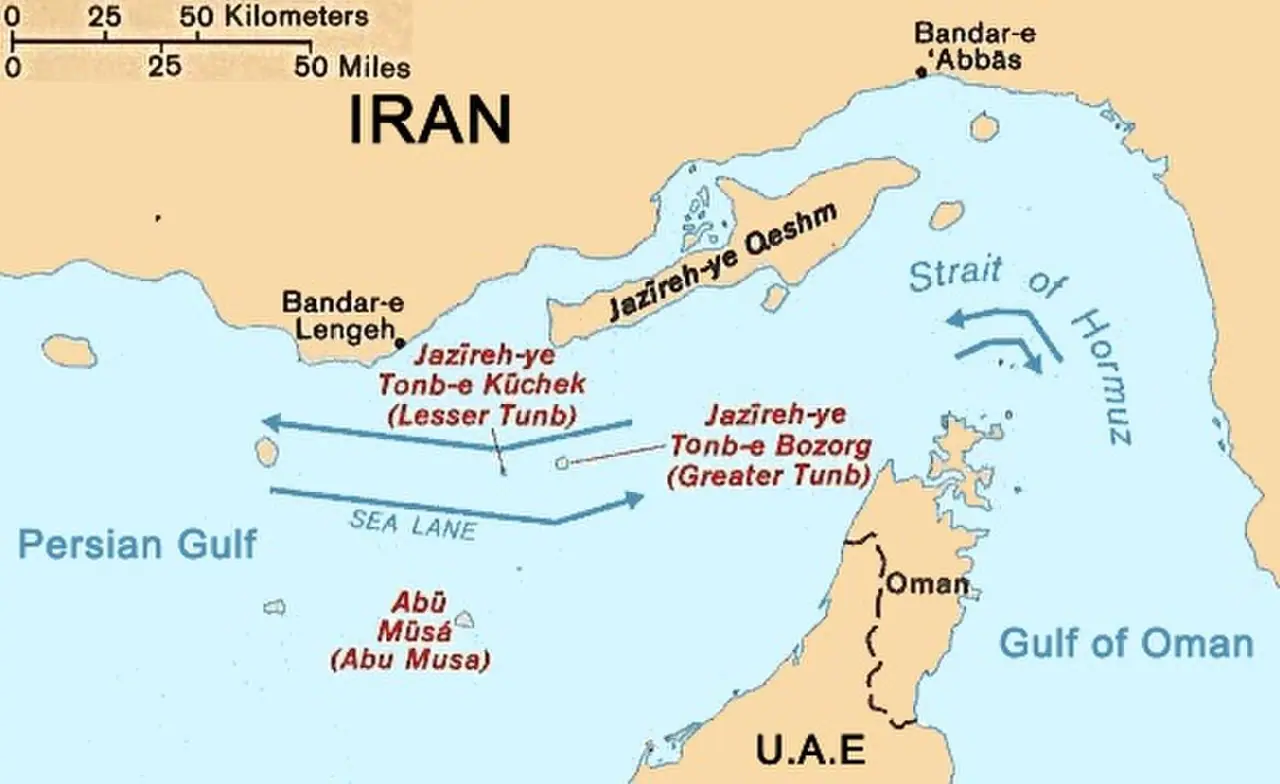
Mid-sized British companies—the revenue band professional services firm BDO typically frames as roughly £10m–£500m in annual turnover—are reporting a hard stop on discretionary spending as the United States–Iran conflict keeps crude futures above $100 a barrel and Hormuz-related logistics nerves alive.
In a May snapshot of 500 such firms, reporting on the survey put shelved or cancelled investment at 60%; among retail, technology and financial services leaders the pause on 2026 capital budgets was sharper still, at about 66%. Roughly 38% of respondents were considering passing higher input bills through to customers, while 30% said they were likely to pause hiring or cut staff.
Those headline ratios land awkwardly beside national accounts detail showing business investment still edging up on a quarterly basis—proof that aggregate GDP prints can mask a widening split between multinationals with hedging desks and domestically financed mid-caps living invoice-to-invoice.
HR directors see a defensive spring even before payroll catches up
Separate employer polling by the Chartered Institute of Personnel and Development, summarised in mid-May trade coverage of more than 2,000 organisations surveyed between late March and late April 2026, found cost management the dominant boardroom priority for 58% of respondents—well ahead of productivity improvement at 44% or market-share growth at 35%. The net employment balance—the share expecting to add staff minus those expecting cuts—remains only modestly positive at +10, while 22% of employers still expect redundancies within three months, rising to about 26% among public-sector bodies.
Median basic pay settlements expected over the next 12 months are still clustered near 3% for an eighth consecutive quarter, which means real wages risk slipping again if headline inflation re-accelerates on energy pass-through. The message from people teams is therefore consistent with chief financial officers: conserve cash, lengthen replacement cycles, and treat external hiring as a last resort unless revenue lines are visibly accelerating.
Inflation prints already flash amber on transport fuel
Chamber economists responding to Office for National Statistics data put March consumer price inflation at 3.3% and argued transport was the largest single contributor because of the rapid pass-through from pump prices. Their research chain noted that even before the latest shock, first-quarter surveys had shown 73% of firms citing labour bills and 54% citing energy as inflation drivers—so the March figure is framed inside the trade bodies as more likely a floor than a ceiling if wholesale gas and diesel curves stay elevated through summer.
Money markets and the Bank of England therefore face the familiar stagflationary fork: easing to protect jobs risks validating higher inflation expectations, while holding or tightening Bank Rate into a hiring slowdown could deepen the very unemployment the Monetary Policy Committee wants to avoid. Press reporting around the same week notes the Bank has left Bank Rate unchanged since the late-February widening of hostilities but has warned it may still need to tighten if second-round wage and services effects appear.
What businesses say they need beyond rhetoric
BDO’s public commentary pairs the survey with a lobbying ask: a dedicated supply-disruption fund with grants and targeted fuel relief for the worst-hit balance sheets, alongside incentives to onshore or nearshore components after about 33% of respondents said they wanted to prioritise local suppliers. EY’s parallel chief-executive pulse, also quoted in the same news cycle, flags geopolitical conflict as a top-year risk for more than half of UK bosses, with almost nine in ten telling the firm that disciplined capital allocation now beats “growth at any cost.”
None of those prescriptions automatically unlocks private investment—fiscal bandwidth, planning reform, and grid connections still sit in Whitehall’s court—but they explain why boardrooms sound more interested in resilience playbooks than in opening new factories while tanker insurance remains jumpy and sterling funding costs stay sensitive to every MPC comma.
Geography and themes
Related places and recurring themes for this story.
- United Kingdom
- Economy
- Middle East
Suggested reading
Other stories that pair well with this one—often from the same section or on overlapping themes.
India’s energy stress deepens as Hormuz risk drains crude tanks and forces pump-price catch-up
Commercial and strategic crude pools tracked by analytics houses have slid about fifteen per cent since late February while refiners keep runs high; Delhi is now bridging the gap with larger Atlantic and Russian-linked programmes, excise sacrifices, citizen conservation appeals, and the first visible retail increases after months of political patience.
IMF nudges up its 2026 UK growth call while flagging Hormuz and home-grown risks
Article IV staff now pencil about 1.0 per cent GDP growth for 2026 after a modest upward revision from April’s World Economic Outlook track, yet they still warn that a drawn-out Middle East conflict, volatile energy markets, and domestic hesitation could sap consumption and investment.
UK fields low-cost APKWS on Gulf Typhoons to blunt Shahed-style drone economics
Laser-guided 70mm rockets are reaching operational Typhoon loadsheets in weeks rather than years so interceptors can sit closer to the price of the one-way airframes they are meant to knock down—while ministers still have to balance magazine depth, basing access, and the rest of the regional air-defence stack.
Has Brexit really been a ‘catastrophic mistake’ for the UK?
The phrase is now political ammunition—most recently from a Labour leadership hopeful—but answering it honestly means separating rhetorical heat from official productivity modelling, from long-run polling regret, and from what voters will still tolerate if Westminster tries to reopen the 2016 choice.
Cooper presses Gulf partners to reopen Hormuz routes farmers need for fertiliser
Britain’s foreign secretary has tied Iran’s disruption of the strait to fertiliser reaching African fields and wider prosperity, while parallel reporting documents urea spikes, stuck cargoes, and UN hunger modelling that treat the next planting cycles as the clock that matters.
Brussels Brexit veterans say a UK return would mean normal EU membership, not the old carve-outs
Georg Riekeles and Sandro Gozi, among others, describe warmth toward a future application but zero appetite to recreate bespoke opt-outs; the Commission stays on this week’s brief—July summit prep—not hypothetical accession terms.
Israel boards Global Sumud flotilla off Crete; President Connolly’s sister sails on hull that slipped the net
Night-time interceptions in late April 2026 emptied more than twenty small craft of roughly 175–200 activists hundreds of nautical miles from Gaza, including seven Irish passport holders—while Dr Margaret Connolly, sister of President Catherine Connolly, remained with a companion vessel that organisers and reporters said had not been taken.
Manhunt in Norfolk after reports two teenage girls were raped on Great Yarmouth seafront
Norfolk Constabulary says it was called to South Beach Parade just after midnight on 16 May 2026; one man in his 30s is in custody after a Northamptonshire arrest while detectives hunt a second male suspect and ask witnesses to quote crime reference 36/34665/26.
India says Russian crude buys track commercial logic—not Washington’s waiver calendar
Petroleum ministry joint secretary Sujata Sharma told reporters on 18 May 2026 that imports ran before, during, and after the latest U.S. Treasury carve-out, while state fuel retailers still bleed roughly ₹750 crore a day even after a ₹3-per-litre pump increase.
Why America feels split—and why the world can’t agree on the United States
Census and World Bank population lines, Pew’s partisan and trust batteries, inequality in the World Bank Gini series, and Pew’s Spring 2024 global snapshot: one country’s domestic fracture sitting next to a median foreign public that still tilts favourable—just not everywhere.
Keep exploring
Browse the full archive or return to the front page.
Sources and external links
Sources and filings our editors consulted to verify this story. External links open in a new tab.
- Iran Conflict Deepens Inflation Concerns (British Chambers of Commerce) (opens in a new tab)— British Chambers of Commerce