Section World
Maldives suspends search for 4 Italians in underwater cave after military diver dies
A national-defense diver died of decompression illness during a deep recovery attempt; Malé now awaits Finnish cave specialists while rough seas and a suspended vessel licence frame a widening accident probe.
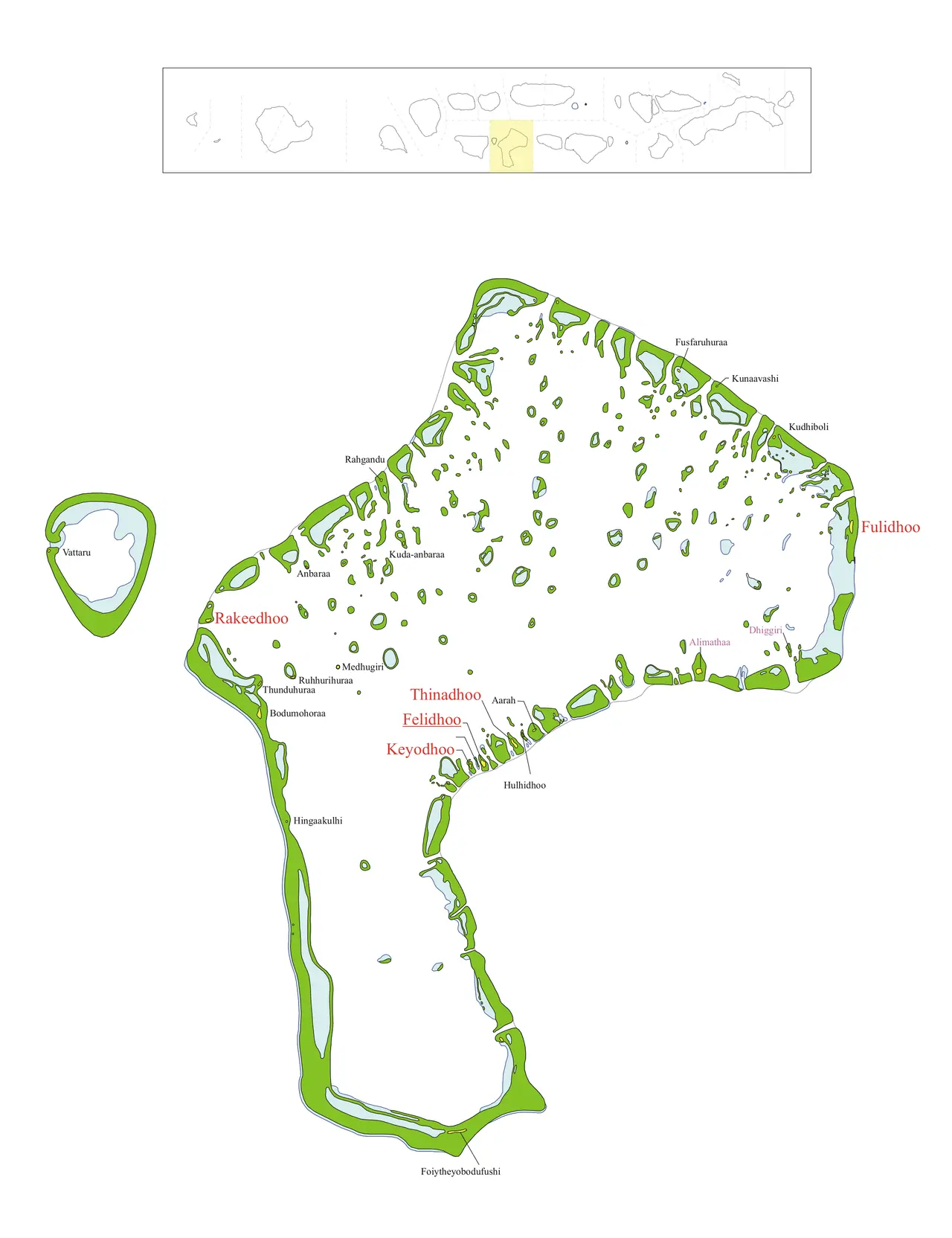
Maldivian authorities on Saturday, May 16, 2026 suspended the active search for four Italian divers believed trapped deep inside an underwater cave in Vaavu Atoll, after Mohamed Mahudhee, a member of the national armed forces, died of decompression illness following a hospital transfer to the capital. The pause came mid-mission while teams were still trying to mark and penetrate a complex where visibility, depth, and decompression obligations sharply raise risk for both military and volunteer divers.
Presidential staff described the death as proof of how punishing the recovery had become. Officials said they would stand down until three Finnish specialists in deep and cave diving arrive on Sunday, May 17, to redesign the approach—an implicit acknowledgment that domestic capacity had hit its operational ceiling without taking more avoidable losses.
What is known about the Italian party and the first recovery
Italy’s foreign ministry told reporters a party of five Italian citizens had been exploring a cave at roughly fifty metres—about one hundred sixty feet—on Thursday, May 14, 2026, well beyond the thirty-metre recreational ceiling the Maldives applies for routine scuba tourism. One body, that of the group’s diving instructor, was recovered Thursday near the cave entrance, leading planners to assume the remaining four entered the flooded passages.
Authorities named the dead Italians as Monica Montefalcone, an ecology associate professor at the University of Genoa; her daughter Giorgia Sommacal; marine biologist Federico Gualtieri; researcher Muriel Oddenino; and instructor Gianluca Benedetti. The university later clarified that Montefalcone and Oddenino were in the country on an official climate-and-biodiversity monitoring mission, but that the fatal dive was undertaken privately and was not part of the approved research schedule; the two students were not on the government-funded work package at all.
Weather, licensing, and the widening accountability lens
Rough seas repeatedly interrupted surface support and small-boat logistics, slowing rotations for the eight local divers who worked in shifts Saturday under direction from Colombo-based consular staff and Malé incident command. The tourism ministry suspended the operating licence of the liveaboard Duke of York pending a safety investigation—standard when a charter ends in multiple fatalities and suspected breaches of depth rules.
A lawyer for the Italian tour company that marketed the cruise told domestic media the firm had not authorized a cave or technical profile and would have blocked a planned descent past thirty metres, which in the Maldives typically requires explicit maritime clearance. Investigators will still have to reconcile that claim with deck logs, gas planning, and witness statements from roughly twenty other Italians aboard who were reported safe.
Why fifty-metre cave work sits in a different risk class than “advanced recreational” diving
Below about forty metres, most recreational training agencies classify dives as technical: staged decompression, redundant gas, and team protocols are expected because a direct ascent is not always possible in overhead environments. Inside caves, silt-out, line entanglement, and navigation errors can strand a team even when surface weather is calm.
That risk stack helps explain why Malé leaned on military divers first—disciplined logistics and medical support—but also why the loss of one service member forced a strategic pause rather than a simple personnel swap: each additional push inside the warren consumes bailout gas, scrubber duration, and hyperbaric bed capacity that the archipelago cannot surge indefinitely without outside experts.
What would change the operational picture next
Finnish cave divers arriving Sunday, May 17, 2026 are expected to re-survey the entrance, decide whether line penetration is still tenable given silt and collapse risk, and propose either a staged recovery or a formal suspension on safety grounds. Italian foreign minister Antonio Tajani pledged to repatriate remains when conditions allow; the Red Crescent offered psychological support to survivors ashore.
Until the cave is either cleared or sealed as unsafe, the incident will remain a live file for insurers, training agencies, and Maldivian regulators debating whether liveaboard operators need tighter verification of guest dive plans beyond paper waivers.
Geography and themes
Related places and recurring themes for this story.
- Maldives
- Italy
- Maritime safety
Suggested reading
Other stories that pair well with this one—often from the same section or on overlapping themes.
Drone strikes generator outside UAE nuclear plant perimeter
Air defenses intercepted two of three unmanned aircraft entering from the west, but a third hit an electrical generator near the Barakah facility, igniting a fire.
U.S. indicts Raúl Castro over 1996 plane shootdown
Federal prosecutors in Miami unsealed murder and conspiracy charges against the 94-year-old former Cuban leader for his alleged role in downing two civilian aircraft.
Aftenposten Modi Cartoon Stirs Racism Row
Aftenposten ran Halleraker’s cartoon the same day as Rossavik’s Meninger column; Red MP Rana called it racist; political editor Alstadheim told Dagbladet the symbols backed Rossavik’s point and were not meant to demean.
Cooper presses Gulf partners to reopen Hormuz routes farmers need for fertiliser
Britain’s foreign secretary has tied Iran’s disruption of the strait to fertiliser reaching African fields and wider prosperity, while parallel reporting documents urea spikes, stuck cargoes, and UN hunger modelling that treat the next planting cycles as the clock that matters.
Tehran floats Hormuz tolls on subsea internet cables as IRGC-tied media talk billions
Euronews and RFE/RL trace how Tasnim- and Fars-style outlets are packaging seabed leverage—transit fees, forced maintenance clauses, even cloud-giant localisation demands—while Mostafa Taheri, an Iranian parliamentary industries voice, throws around a headline revenue ceiling on the order of fifteen billion dollars annually that markets treated as rhetoric, not an invoice.
Tehran markets a ‘Hormuz Safe’ lane that settles marine cover in Bitcoin as war-risk premiums bite
Indian and trade-press explainers describe a new Iranian digital platform pitching blockchain-settled policies for commercial hulls threading the strait—complete with ministry talk of a ten-billion-dollar revenue ceiling—while compliance lawyers warn U.S. and EU persons that paying premiums into Iranian rails can still collide with sanctions law regardless of coin type.
Trump delays Iran strike after Gulf appeal
President Donald Trump said late on 18 May 2026 in Washington that he was postponing a U.S. military strike on Iran that had been scheduled for the following day after Qatar, Saudi Arabia, and the United Arab Emirates asked for time while diplomacy continued; he also told the armed forces to stay ready for a large-scale assault if talks fail.
Havana leans on self-defense law while rejecting US drone-strike talk as intervention pretext
President Miguel Díaz-Canel framed military deterrence as a lawful shield, not a war wish, after US-facing outlets amplified an Axios-style tally of imported drones; Washington’s January national-emergency declaration on Cuba still frames the island as an extraordinary threat.
Brazil’s TRF-1 faces a reckoning on whether Belo Sun’s Volta Grande gold license snaps back to freeze
After a single federal appellate judge revived the Canadian miner’s installation permit in February 2026, prosecutors appealed to the same court’s Sixth Panel—where the next collegiate ruling decides if the decade-old suspension logic from 2017 returns or the Pará project keeps rolling.
Brussels Brexit veterans say a UK return would mean normal EU membership, not the old carve-outs
Georg Riekeles and Sandro Gozi, among others, describe warmth toward a future application but zero appetite to recreate bespoke opt-outs; the Commission stays on this week’s brief—July summit prep—not hypothetical accession terms.
Keep exploring
Browse the full archive or return to the front page.
Sources and external links
Sources and filings our editors consulted to verify this story. External links open in a new tab.