Section World
Germany braces as U.S. plans 5,000-troop cut after public clash with Trump over Iran
Berlin says a large American footprint stays in its interest, but officials treated a drawdown as foreseeable after alliance friction over the Middle East fight and transatlantic messaging.
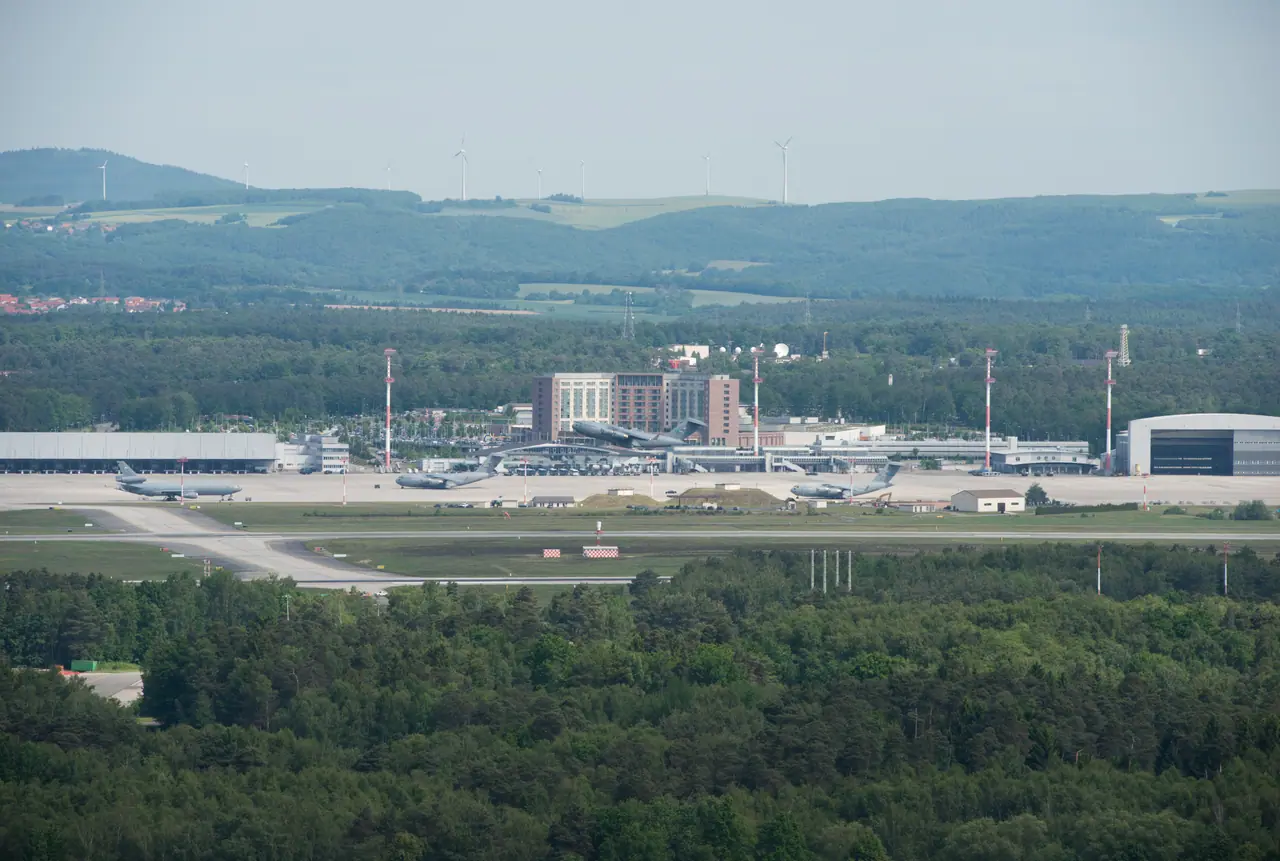
The United States plans to withdraw about 5,000 active-duty service members from Germany on a six- to twelve-month timeline, according to a Defense Department statement attributed to the defense secretary’s office—shrinking the largest American footprint in Europe by roughly one-seventh against a backdrop of sharp public disagreement between Washington and Berlin over the Iran war and alliance burden-sharing.
German leaders framed the move as unwelcome yet not shocking: the defense minister told reporters the American presence in Europe, and especially in Germany, served both countries’ interests, while adding that a reduction had looked “foreseeable” given wider U.S. posture reviews.
Order of events that put the troop headline next to the diplomacy fight
| Beat | What reporting established (early May 2026) |
|---|---|
| Public split | Chancellor Friedrich Merz criticized U.S. handling of the Iran conflict—including whether there was a clear strategic exit—before the troop news moved on the wires. |
| Presidential response | Donald Trump answered with scathing posts about Germany’s economy and migration record, alongside claims about Merz’s judgment on Iran and nuclear risk. |
| Formal military line | A Pentagon spokesman said Defense Secretary Pete Hegseth signed the Germany order after a force-posture review tied to theatre needs and conditions on the ground. |
| Scale | Reporting cited more than 36,000 U.S. active-duty troops in Germany as of late 2025, making a 5,000-person cut material but not a full exodus. |
That sequencing matters for Berlin: the drawdown is legally a U.S. decision, but politically it landed in the same news cycle as an unusually personal alliance row.
Why Ramstein still anchors the mental map
Much of the U.S. story in Germany is infrastructure-heavy: air mobility, medical evacuation pipelines, and command nodes clustered around Ramstein Air Base and the Kaiserslautern military community. Early accounts stressed that not every function moves at the same speed—medical and certain support missions were described as continuing—while one line of reporting tied part of the cut to a brigade-level combat package and adjustments to planned fires units.
For NATO planners, the fear is less a single headline number than compounding friction: fewer rotational slots, longer certification backlogs, and harder coordination when European capitals are already juggling Ukraine support, Middle East shipping risk, and higher defense budgets.
What changed since the last big “move troops out of Germany” fight
At the end of Trump’s first term, Congress blocked a much larger proposed Germany drawdown; the Biden administration later restored much of the planned posture. Germany, meanwhile, has moved its own spending math: public finance reporting in 2026 pointed toward defense outlays approaching 3% of GDP within the next budget window—an enormous shift from the sub-2% era that Washington once cited as a grievance.
That context does not automatically buy leverage in a White House cost-cutting mood, but it changes how Berlin argues its case: less “free rider,” more “industrial and fiscal mass moving toward the alliance target,” even as commanders still want American enablers on German soil.
Italy, Spain, and the wider “who helps where” question
In the same period, Trump publicly floated possible troop cuts in Italy and Spain, criticizing both for not helping enough on Iran-related operations—part of a broader pattern of tying U.S. forward presence to perceived political alignment on Middle East contingencies.
For Germany, that widening aperture raises a second-order worry: if Washington treats European basing as a dial rather than a floor, hedging moves—more European lift, different exercise schedules, harder prioritization—become default planning assumptions rather than crisis drills.
What would sharpen or soften the story next
Harder facts than press statements would reset the stakes: unit designations, home-station destinations, basing agreements, and any Congressional notification tied to permanent strength changes. NATO defense-minister readouts after Pentagon travel, plus German parliamentary debates on host-nation support and infrastructure spending, will show whether Berlin treats this as a one-off adjustment or the start of a sustained U.S. pullback from central Europe.
Geography and themes
Related places and recurring themes for this story.
- Germany
- United States
- NATO
Suggested reading
Other stories that pair well with this one—often from the same section or on overlapping themes.
Chancellor Merz and President Trump hold 'reconciliatory' phone call after weeks of friction
The two leaders seek to move past a diplomatic rift over Iran and troop withdrawals, coordinating positions ahead of the NATO summit in Ankara.
Canada tightens Arctic and Nordic defense links as Greenland studies a Ranger-style patrol force
After months of U.S. rhetoric over Greenland and strained North American politics, Ottawa is deepening military procurement talks with Denmark, Finland, Iceland, Norway, and Sweden while Nuuk and Copenhagen consult Canada on adapting the Canadian Rangers model for local surveillance.
Hegseth abruptly cancels 4,000-troop rotation to Poland, raising NATO reliability concerns
The U.S. defense secretary's decision to halt the scheduled nine-month deployment caught European allies off guard and follows a separate withdrawal of 5,000 troops from Germany announced weeks earlier.
U.S. indicts Raúl Castro over 1996 plane shootdown
Federal prosecutors in Miami unsealed murder and conspiracy charges against the 94-year-old former Cuban leader for his alleged role in downing two civilian aircraft.
Trump delays Iran strike after Gulf appeal
President Donald Trump said late on 18 May 2026 in Washington that he was postponing a U.S. military strike on Iran that had been scheduled for the following day after Qatar, Saudi Arabia, and the United Arab Emirates asked for time while diplomacy continued; he also told the armed forces to stay ready for a large-scale assault if talks fail.
Havana leans on self-defense law while rejecting US drone-strike talk as intervention pretext
President Miguel Díaz-Canel framed military deterrence as a lawful shield, not a war wish, after US-facing outlets amplified an Axios-style tally of imported drones; Washington’s January national-emergency declaration on Cuba still frames the island as an extraordinary threat.
Greenlandic PM says US ambitions on controlling the territory still show no sign of changing
Jens-Frederik Nielsen is pairing warmer language about closed-door trilateral talks with the same red lines Nuuk has held since winter: no sale, no transfer of sovereignty, and deep scepticism that Washington has abandoned designs on ownership even as negotiators discuss southern bases.
India says Russian crude buys track commercial logic—not Washington’s waiver calendar
Petroleum ministry joint secretary Sujata Sharma told reporters on 18 May 2026 that imports ran before, during, and after the latest U.S. Treasury carve-out, while state fuel retailers still bleed roughly ₹750 crore a day even after a ₹3-per-litre pump increase.
NATO’s largest European special-forces rehearsal opens as Trojan Footprint 2026
Roughly three thousand American and allied commandos from twenty-three countries are training from the Baltic rim down through the Balkans and into the Mediterranean and Black Sea basins—led out of Stuttgart by U.S. Special Operations Command Europe with NATO’s special-operations headquarters in the same chain of command.
Two Navy Growlers collide mid-air at Mountain Home air show; all four crew eject safely
Two U.S. Navy EA-18G Growlers struck each other during an aerial demonstration on the second day of Gunfighter Skies at Mountain Home Air Force Base, Idaho. Officials said all four aviators ejected and were being evaluated as the base locked down and investigators opened a review.
Keep exploring
Browse the full archive or return to the front page.
Sources and external links
Sources and filings our editors consulted to verify this story. External links open in a new tab.